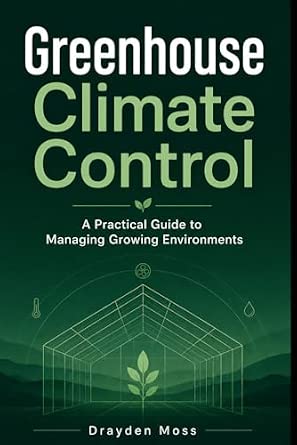
A useful greenhouse climate control checklist helps you manage temperature, ventilation, humidity, and seasonal changes—not just pick a heater or open a vent. From these ten guides, Greenhouse Climate Control: A Practical Guide to Managing Growing Environments is my best overall choice for its focused subject; The Automatic Greenhouse stands out for DIY ventilation, while Greenhouse Climate Control: An Integrated Approach suits readers seeking a systems-level perspective. The tradeoff is between focused climate instruction, hands-on automation, and broader beginner or professional guidance. Read on for how each title fits a different growing setup and experience level.

Get garden gear delivered free with Prime
- Fast, free delivery on millions of items
- Prime Video, Amazon Music and more included
- Member-only deals all year
Complete the kit


Key Takeaways
- Focused climate guidance leads the list: the practical guide and integrated-approach title address climate directly, while several other books treat it as one part of general greenhouse gardening.
- Automation is a distinct need: The Automatic Greenhouse centers on hands-free ventilation, making it a better match for DIY vent projects than broad management handbooks.
- Beginner titles overlap but differ in emphasis: the First-Time Gardener Handbook foregrounds getting started and seasonal growing, while other beginner guides highlight budget planning, cold-climate tactics, or DIY projects.
- Professional depth is not the same as a home checklist: Greenhouse Management: A Guide to Operations and Technology, Third Edition is positioned for readers interested in operations and technology, not just household climate routines.
- Choose by the gap you need to fill: the strongest fit depends on whether you need climate fundamentals, ventilation automation, integrated planning, or beginner-friendly year-round growing advice.


| greenhouse climate control checklist | Format | Edition | Language | Publication date |
|---|---|---|---|---|
| Greenhouse Climate Control: A | Not specified | — | — | — |
| The Automatic Greenhouse: A DI | Book | — | — | — |
| Not Too Hot | — | — | — | — |
| Greenhouse Management: A Guide | Not specified | Third Edition | — | — |
| The First-Time Greenhouse Gard | — | — | — | — |
| Greenhouse Gardening Guide For | Not specified | Not specified | Not specified | Not specified |
| Greenhouse Gardening Handbook | Not specified | Not specified | Not specified | Not specified |
| Greenhouse climate control: an | Not specified | Not specified | Not specified | Not specified |
| Greenhouse Gardening for Begin | Not specified | Not specified | Not specified | Not specified |
| A Beginner’s Greenhouse Garden | Not specified | Not specified | Not specified | Not specified |
More Details on Our Top Picks
Greenhouse Climate Control: A Practical Guide to Managing Growing Environments
For a checklist centered on managing the growing environment, this guide has the broadest fit based on its stated scope: it focuses directly on greenhouse climate control rather than making ventilation or beginner setup one part of a wider gardening book. That makes it a sensible first choice for readers who want a general framework for thinking about conditions inside a greenhouse. Compared with The Automatic Greenhouse, it is not specifically presented as a hands-free ventilation manual; compared with Not Too Hot, Not Too Cold, the description does not identify a focused set of temperature methods. The tradeoff is limited detail in the available product information: there are no listed methods, technical topics, or format specifications to judge. I would choose it as the broadest climate-control match, but not on the assumption that it offers particular instructions or tools.
Pros:- Directly focused on managing greenhouse growing environments
- Climate control is the central subject rather than one topic among many
- Broad framing may suit readers looking for an introductory overview
- Can be compared with more narrowly focused temperature and ventilation guides
Cons:- The available description does not identify specific climate-control methods
- No format, technical details, or intended experience level are provided
- Readers cannot confirm whether it covers heating, cooling, humidity, or automation
Best for: Greenhouse owners seeking a general guide specifically focused on managing growing conditions, without needing a stated emphasis on automation or one climate problem.
Not ideal for: Readers who need documented step-by-step ventilation plans, a specified number of temperature methods, or verified technical coverage before choosing.
- Subject:Greenhouse climate control
- Focus:Managing growing environments
- Setting:Greenhouse
- Product type:Guide
- Methods listed:Not specified
- Format:Not specified
Our verdict“Choose this for a broadly framed greenhouse climate-control guide, but pick a more specific title if you need documented methods or detailed coverage.”
The Automatic Greenhouse: A DIY Guide to Hands-Free Ventilation for Greenhouses, Polytunnels, and Sheds
This is the most targeted pick for growers who want ventilation to require less daily attention. Its stated focus is DIY hands-free ventilation, and its coverage extends beyond greenhouses to polytunnels and sheds. That makes it a more specific climate-control choice than Greenhouse Climate Control: A Practical Guide to Managing Growing Environments, whose description gives no particular method or system. It also differs from Not Too Hot, Not Too Cold: that guide covers heat and cold protection, while this one is framed around ventilation automation. The tradeoff is scope. The listing does not say whether the book covers heating, humidity, or temperature control beyond ventilation, so it is not a full climate checklist on the information provided. I would put it high on a list for reducing manual venting, not as a replacement for broader seasonal guidance.
Pros:- Specifically focused on hands-free ventilation
- DIY framing suits readers interested in building or setting up a system themselves
- Applies to greenhouses, polytunnels, and sheds
- Part of a named series on autonomous growing
Cons:- The provided description does not confirm coverage beyond ventilation
- No listed technical specifications or particular DIY methods are provided
- Its narrow focus may leave readers needing a separate guide to temperature and seasonal protection
Best for: DIY growers with a greenhouse, polytunnel, or shed who want to explore hands-free ventilation rather than relying on frequent manual opening and closing.
Not ideal for: Readers seeking a broad guide to heating, cooling, and seasonal temperature protection, since the stated subject is ventilation.
- Format:Book
- Series:The Autonomous Growing Series
- Series number:3
- Primary subject:Hands-free ventilation
- Approach:DIY
- Covered structures:Greenhouses, polytunnels, and sheds
Our verdict“Choose this if automating ventilation is your main checklist priority; choose a broader climate guide for heat, cold, and other growing conditions.”
Not Too Hot, Not Too Cold: Managing Greenhouse Temperatures
For a checklist that starts with preventing heat stress and cold damage, this is the clearest match in the group. The book covers 13 temperature-management methods and includes options with and without power, giving readers a stated range of approaches rather than a single ventilation solution. That makes it a stronger fit for year-round temperature planning than The Automatic Greenhouse, which is specifically about hands-free ventilation. It is also more concrete on temperature coverage than Greenhouse Climate Control: A Practical Guide to Managing Growing Environments, whose description does not name specific methods. The tradeoff is that the listed scope centers on temperature: the product information does not confirm broader treatment of humidity, ventilation automation, or greenhouse operations. I would favor it when summer overheating and winter cold are the main risks to address.
Pros:- Addresses both summer heat and winter cold
- Lists 13 temperature-management methods
- Includes approaches with and without power
- Has a clearer temperature focus than the broader climate-control titles
Cons:- The provided description does not specify coverage of humidity or other climate factors
- No individual methods or technical details are identified in the product information
- May need to be paired with a ventilation-focused guide for automation plans
Best for: Greenhouse growers in climates with both hot summers and freezing winters who want several temperature-protection approaches, including non-powered options.
Not ideal for: Buyers whose main need is automated vent control or a verified guide to full greenhouse management beyond temperature.
- Subject:Greenhouse temperature management
- Primary risks covered:Summer heat and winter cold
- Number of methods:13
- Powered options:Included
- Non-powered options:Included
- Setting:Greenhouse
Our verdict“Choose this when seasonal overheating and freezing are your main concerns and you want both powered and non-powered options.”
Greenhouse Management: A Guide to Operations and Technology, Third Edition
This title earns a distinct place for readers who want climate control considered alongside greenhouse operations and technology. Its third-edition status is a useful point of identification, but the available description does not spell out particular systems, methods, or temperature topics, so I would not treat it as a confirmed technical manual for any one climate task. Compared with Not Too Hot, Not Too Cold, it is framed more broadly around management rather than a defined set of temperature-protection methods. Compared with The First-Time Greenhouse Gardener Handbook, it does not present itself as a beginner’s guide to construction, seeds, and year-round growing. The tradeoff is uncertainty: the listing gives little detail about who the edition serves or how deeply it covers climate systems. I would shortlist it for readers seeking a management-oriented reference, not a narrowly specified checklist.
Pros:- Frames greenhouse topics around both operations and technology
- Third edition is explicitly identified
- Broader management angle differs from single-topic temperature and ventilation guides
- May suit readers who want climate decisions considered alongside greenhouse operations
Cons:- The available description does not name specific climate-control topics or methods
- No audience level or technical scope is provided
- The listing does not establish whether it includes practical greenhouse checklists
Best for: Greenhouse operators or experienced growers looking for a management-and-technology reference that may place climate decisions within wider operations.
Not ideal for: New gardeners who need clearly described step-by-step climate instructions, or buyers seeking a confirmed list of temperature or ventilation methods.
- Subject:Greenhouse management
- Coverage:Operations and technology
- Edition:Third Edition
- Product type:Guide
- Climate-control methods:Not specified
- Format:Not specified
Our verdict“Consider this for a broader operations-and-technology perspective, but choose a more specifically described guide for a defined climate-control task.”
The First-Time Greenhouse Gardener Handbook: Simple Steps to Build Your Greenhouse, Start Seeds, Control Climate, and Grow Food in Every Season
This handbook is the most approachable fit for someone building greenhouse skills from the ground up: its stated scope runs from building a greenhouse and starting seeds to climate control and year-round food growing. That wider sequence can help a new owner connect setup decisions with the conditions plants need later. Compared with Greenhouse Climate Control: A Practical Guide to Managing Growing Environments, it gives climate control a place within a broader beginner journey rather than making it the sole subject. It is also less specifically focused on automation than The Automatic Greenhouse, and the description does not claim a defined set of temperature methods like Not Too Hot, Not Too Cold. The tradeoff is breadth: readers who already have a greenhouse and need detailed climate procedures may prefer a more focused title. I would choose it as an entry point, not a specialist reference.
Pros:- Explicitly aimed at beginner greenhouse gardeners
- Connects greenhouse building with later growing tasks
- Includes seed starting and climate-control topics
- Covers year-round food growing as part of the beginner scope
Cons:- Climate control is one of several subjects rather than the sole focus
- The product description does not specify particular temperature or ventilation methods
- May be too introductory for growers seeking technical operations guidance
Best for: First-time greenhouse gardeners who want one introductory handbook spanning structure, seed starting, climate basics, and growing food across seasons.
Not ideal for: Experienced growers who already know greenhouse setup and need detailed, dedicated guidance on ventilation automation or temperature-management methods.
- Audience:First-time greenhouse gardeners
- Coverage:Greenhouse building, seed starting, climate control, and year-round food growing
- Building guidance:Included
- Seed-starting guidance:Included
- Climate-control coverage:Included
- Growing scope:Food growing in every season
Our verdict“Choose this as a broad first handbook if you are learning greenhouse setup and climate basics together, rather than seeking specialist climate instructions.”
Greenhouse Gardening Guide For Beginners: Grow Organic Vegetables, Fruits, and Herbs Year-Round Using Proven Cold-Climate Strategies and Easily Master Natural Pest Control
I’d put this guide on a greenhouse climate control checklist for beginners whose main challenge is extending the season in a cold climate. Its title points to a practical mix of year-round growing, cold-weather strategies, and natural pest control, so it has a broader growing focus than Greenhouse climate control: an integrated approach, whose title centers specifically on climate management. That breadth may help readers connect temperature choices with crops and pest prevention, but it also means the available information does not establish how detailed its control guidance is. Compared with Not Too Hot, Not Too Cold: Managing Greenhouse Temperatures, this looks like the more general beginner-oriented choice rather than a temperature-focused reference. I’d choose it for cold-season growing context, not as a substitute for verified equipment specifications or a detailed control manual.
Pros:- The title specifically addresses cold-climate growing.
- Covers vegetables, fruits, and herbs rather than a single crop category.
- Pairs year-round growing topics with natural pest control.
- Beginner-oriented framing may suit readers building foundational greenhouse knowledge.
Cons:- No description or technical details were supplied to verify the depth of its climate-control instruction.
- Its wide gardening scope may offer less focused temperature guidance than Not Too Hot, Not Too Cold: Managing Greenhouse Temperatures.
Best for: New greenhouse growers in cold climates who want an introductory guide that connects year-round crops with natural pest-control topics.
Not ideal for: Growers seeking a technical reference on ventilation, heating systems, sensors, or detailed greenhouse climate-control procedures; the supplied product information does not confirm that level of detail.
- Format:Not specified
- Language:Not specified
- Publication date:Not specified
- Edition:Not specified
- Page count:Not specified
- Climate focus:Cold-climate strategies, as stated in the title
- Growing topics:Organic vegetables, fruits, herbs, and natural pest control, as stated in the title
Our verdict“Choose this guide if cold-weather, year-round growing is your priority and you want a beginner-level overview alongside natural pest-control topics.”
Greenhouse Gardening Handbook for Beginners: Discover Budget-Conscious Building Plans, Simple Climate Control Tips, Organic Pest Control Solutions, and Time-Saving Techniques for Year-Round Success
For a climate-control checklist that starts before planting, I’d consider this handbook because its title combines budget-conscious building plans with simple climate-control tips. That makes it a different kind of beginner pick from Greenhouse climate control: an integrated approach: the handbook appears to link basic climate practices to planning and building, while the latter is the more directly climate-focused title. It also promises organic pest control and time-saving techniques, which could help readers think about routine greenhouse work as well as growing conditions. The tradeoff is scope: building plans and several gardening topics may leave less room for detailed guidance on any one control method. The product details supplied do not confirm specific plans, systems, or technical depth, so I’d treat it as a starting point rather than a proven design manual.
Pros:- The title explicitly combines greenhouse planning with climate-control tips.
- Budget-conscious framing suits readers planning a restrained setup.
- Includes organic pest-control and time-saving topics in its stated scope.
- Beginner positioning may make it approachable for new greenhouse owners.
Cons:- The supplied information does not specify the building plans or their level of detail.
- Its broad set of topics may be less focused on climate systems than Greenhouse climate control: an integrated approach.
Best for: First-time growers planning a modest greenhouse who want an introductory resource spanning budget-minded building, basic climate tips, and garden upkeep.
Not ideal for: Readers who already have a greenhouse and need in-depth climate-control engineering or verified construction drawings.
- Format:Not specified
- Language:Not specified
- Publication date:Not specified
- Edition:Not specified
- Page count:Not specified
- Audience:Beginners, as stated in the title
- Stated topics:Budget-conscious building plans, climate-control tips, organic pest control, and time-saving techniques
Our verdict“Pick this as an introductory planning companion if you want climate tips alongside budget-minded building and general greenhouse routines.”
Greenhouse climate control: an integrated approach
Among these five titles, this is the clearest match for a greenhouse climate control checklist: its stated subject is climate control, not beginner gardening as a whole. The phrase “integrated approach” suggests a wider view of managing the growing environment, but the supplied data does not describe its methods, systems, or intended reader, so I would not assume particular technical coverage. Compared with Greenhouse Gardening Handbook for Beginners, it appears less oriented toward building plans and general garden routines and more tightly aligned with the central checklist question. That focus is its main advantage—and its main limitation for a new grower who also needs crop selection or pest advice. I’d rank it above the broader beginner titles for readers seeking a climate-centered reference, while checking the full edition details before relying on it for a specific greenhouse setup.
Pros:- Its title directly identifies greenhouse climate control as the subject.
- The integrated framing distinguishes it from broadly scoped beginner gardening titles.
- A focused topic may make it a better checklist companion for climate-management research.
- The listed ISBN gives readers a specific identifier for checking edition details.
Cons:- The supplied product data does not explain what the integrated approach covers.
- Audience, publication details, and technical depth are not provided.
- The title does not indicate coverage of beginner construction, crop selection, or pest management.
Best for: Greenhouse owners or serious learners whose main goal is a focused resource about managing greenhouse climate rather than broad beginner gardening advice.
Not ideal for: New growers looking for a complete starter guide with confirmed building instructions, crop recommendations, or pest-control steps.
- Format:Not specified
- Language:Not specified
- Publication date:Not specified
- Edition:Not specified
- Page count:Not specified
- Stated subject:Greenhouse climate control
- ISBN:9074134173
Our verdict“Choose this when climate management is your central research need, but verify the contents and edition details before expecting specific technical guidance.”
Greenhouse Gardening for Beginners: Step-by-Step Tips to Master Plant Selection, Temperature Control, and Pest Management to Enjoy Year-Round Fresh Harvests on a Budget
This title presents a useful checklist-style combination for a first greenhouse: plant selection, temperature control, pest management, and budget-minded year-round harvesting. I’d rank it as the step-by-step starter because it explicitly links climate to crop choices and pest concerns, rather than treating temperature as a standalone task. That makes it broader than Greenhouse climate control: an integrated approach, which is the more focused option by title, and more directly organized around sequential beginner guidance than Greenhouse Gardening Guide For Beginners, whose emphasis includes cold-climate strategies. The tradeoff is that a budget and beginner focus may mean an introductory treatment rather than detailed system design. Since no description or technical specifications were supplied, I can’t verify how the steps are structured or how deeply temperature-control methods are explained.
Pros:- The title explicitly names temperature control as a core topic.
- Connects climate decisions with plant selection and pest management.
- Step-by-step framing is aimed at beginners.
- Budget-conscious, year-round harvest goals are stated in the title.
Cons:- The supplied information does not confirm the level of detail behind its temperature-control advice.
- Its broad beginner scope may be less climate-focused than Greenhouse climate control: an integrated approach.
Best for: New greenhouse gardeners who want a practical starting point linking crop selection, temperature management, pest control, and budget-aware harvest planning.
Not ideal for: Experienced growers seeking detailed climate-system design or readers who need verified instructions for particular heating, cooling, or ventilation equipment.
- Format:Not specified
- Language:Not specified
- Publication date:Not specified
- Edition:Not specified
- Page count:Not specified
- Audience:Beginners, as stated in the title
- Stated topics:Plant selection, temperature control, pest management, and year-round harvesting on a budget
Our verdict“Select this as a broad first guide if you want step-by-step coverage of temperature, crops, and pests rather than a climate-only reference.”
A Beginner’s Greenhouse Gardening Guide: Grow Year-Round with Climate-Smart Strategies, DIY Projects & Expert Pest Control Tips for a Thriving Garden
I’d shortlist this guide for beginners who want climate-aware gardening paired with hands-on projects. Its title’s combination of climate-smart strategies and DIY projects gives it a more project-oriented angle than Greenhouse Gardening for Beginners, which explicitly lists temperature control, plant selection, and pest management. It also differs from Greenhouse climate control: an integrated approach: this is framed as a general beginner gardening guide, not a climate-only title. That mix may help readers interested in practical, self-directed improvements, but the supplied product data does not identify the projects or explain whether they address ventilation, heating, shading, or other climate tasks. “Expert pest control” appears in the title, though no details are provided to judge its approach. I’d choose it for DIY interest, not on the assumption that its climate instructions cover a particular system.
Pros:- The title pairs climate-smart strategies with DIY projects.
- Year-round growing is part of its stated aim.
- Includes pest-control tips within a beginner gardening frame.
- Its project emphasis gives it a distinct angle among the broad beginner guides.
Cons:- The supplied information does not describe the DIY projects or their climate-control relevance.
- It is framed as a general gardening guide rather than a dedicated climate-control title.
- No technical specifications or publication details were provided.
Best for: Beginner greenhouse gardeners who want climate-aware growing advice and are especially interested in DIY projects.
Not ideal for: Readers seeking a verified, technical climate-control manual or specific instructions for a named greenhouse system.
- Format:Not specified
- Language:Not specified
- Publication date:Not specified
- Edition:Not specified
- Page count:Not specified
- Audience:Beginners, as stated in the title
- Stated topics:Year-round gardening, climate-smart strategies, DIY projects, and pest-control tips
Our verdict“Choose this if DIY projects are part of your greenhouse plans, but look elsewhere for confirmed, system-specific climate-control instruction.”
How We Picked
I ranked these books by how directly their stated scope supports a greenhouse climate control checklist: temperature management, ventilation, seasonal conditions, and the relationship between climate decisions and the rest of greenhouse care. Titles focused on climate or integrated control rank ahead of general gardening guides because they are more directly aligned with the search intent. I also considered whether the subject appears approachable for a home grower, focused on hands-on projects, or aimed at operations and technology.
The ranking reflects the information available from each title and its stated focus, not a claim that I tested the books or verified every technique inside them. A beginner handbook can be the better choice for a new grower even if it is less climate-specific; likewise, an operations guide may suit a technically minded reader better than a short, practical reference. I give each title a distinct role and weigh relevance to climate control alongside audience fit and breadth.
| greenhouse climate control checklist | Format | Edition |
|---|---|---|
| Greenhouse Climate Control: A | Not specified | — |
| The Automatic Greenhouse: A DI | Book | — |
| Not Too Hot | — | — |
| Greenhouse Management: A Guide | Not specified | Third Edition |
| The First-Time Greenhouse Gard | — | — |
| Greenhouse Gardening Guide For | Not specified | Not specified |
| Greenhouse Gardening Handbook | Not specified | Not specified |
| Greenhouse climate control: an | Not specified | Not specified |
| Greenhouse Gardening for Begin | Not specified | Not specified |
| A Beginner’s Greenhouse Garden | Not specified | Not specified |
Factors to Consider When Choosing Greenhouse Climate Control Checklist
Before choosing a guide, decide what your checklist needs to help you do: understand climate variables, set up ventilation, plan for seasonal growing, or coordinate greenhouse operations. These distinctions matter because a broad gardening book may explain general routines without going far into climate, while a focused title may leave construction and beginner basics aside.
Start With the Climate Problem You Need to Solve
Write down the issue you face most often: overheating on sunny days, cold nights, uneven temperatures, or difficulty managing ventilation. A guide centered on temperature management is a more direct starting point for temperature swings than a general beginner handbook. If you need a repeatable routine across several climate factors, favor an integrated approach rather than a single-topic treatment. A common mistake is choosing a book because its title promises year-round growing when the immediate problem is a specific ventilation or temperature challenge. Match the book’s stated scope to the job you need it to do.
Decide How Much Automation You Want
Manual routines can be simple to maintain, but they depend on someone being present to respond to changing conditions. A DIY ventilation guide is more relevant if you want to build or improve hands-free venting, while a general climate guide may better explain the wider management context. Automation can reduce daily intervention, but it introduces equipment, setup, and maintenance decisions that a basic gardening reference may not cover in depth. Avoid treating automatic ventilation as a complete climate plan: it does not by itself address every temperature or seasonal concern. Choose a guide that matches your willingness to build, adjust, and maintain a system.
Match the Reading Level to Your Greenhouse Experience
New growers often need climate advice alongside seed starting, plant selection, and basic greenhouse routines. In that case, a beginner handbook can provide useful context even if climate control is not its only focus. More experienced growers may prefer a climate-specific or integrated title that spends less attention on introductory gardening topics. A common purchasing mistake is assuming that a book labeled for beginners will offer the deepest climate detail, or that a technical guide will be easy to apply to a small home greenhouse. Look for the balance of explanation and practical scope that fits your current knowledge.
Account for Your Season and Local Conditions
A climate checklist is only useful when it reflects the conditions your greenhouse faces. Readers growing through cold seasons may value a guide that explicitly addresses cold-climate strategies, while growers focused on heat and airflow should look for clear attention to temperature and ventilation. General year-round claims do not tell you whether advice fits your local weather, greenhouse covering, or growing schedule. Avoid applying a single routine to every season; the priorities for a cool night and a bright afternoon can differ. Use a book as a framework, then adapt its guidance to your site and plants.
Choose Between a Home-Growing Guide and an Operations Reference
Some readers want a workable home checklist; others need a broader view of greenhouse technology and operations. The third edition of Greenhouse Management: A Guide to Operations and Technology signals a wider operational scope than a beginner-focused gardening title. That breadth may serve readers studying systems or professional practices, but it can be more than a home gardener needs for routine climate decisions. Conversely, a concise beginner guide may not offer the scope a technical reader expects. Decide whether you need day-to-day growing guidance or a wider operations perspective before choosing.
Treat the Book as a Checklist Framework, Not a Substitute for Observation
Even a focused guide cannot account for every greenhouse layout, plant mix, or local weather pattern. Use its advice to establish what to monitor and when, then record conditions and plant responses in your own space. This helps distinguish a recurring climate issue from a one-off fluctuation. One common mistake is following a generic schedule without noticing how shade, ventilation openings, or greenhouse size alter conditions. A good guide should support your decisions, but your observations determine how well its routines fit.
Frequently Asked Questions
Which of these books is the closest fit for a greenhouse climate control checklist?
Greenhouse Climate Control: A Practical Guide to Managing Growing Environments is the most direct match by title and scope. Greenhouse climate control: an integrated approach is another strong option if you want climate treated as part of a connected system rather than as isolated tasks. For a checklist you can apply, compare the books’ focus with the specific factors you need to manage, such as temperature or ventilation. The broader beginner gardening titles may offer useful context but are less directly centered on climate control.
Should I choose a climate-focused guide or a beginner greenhouse gardening book?
Choose a climate-focused guide if you already understand basic greenhouse routines and need more targeted help with environmental management. Pick a beginner book if you also need support with starting seeds, choosing plants, or planning year-round growing. Several titles here combine beginner guidance with climate tips, but their broader scope means climate may share space with other topics. If you are new and facing a specific climate problem, a beginner guide can orient you, while a focused climate title can fill the technical gap.
Is The Automatic Greenhouse a good choice if I want less daily vent adjustment?
It is the most relevant title in this lineup for readers interested in DIY, hands-free ventilation. Its stated focus includes greenhouses, polytunnels, and sheds, which makes it distinct from general climate or gardening guides. However, ventilation automation addresses only part of greenhouse climate management, so it may not be enough if you also need broad guidance on temperature routines or seasonal planning. Pair its project-focused approach with a wider climate resource if your checklist covers more than venting.
Is a professional greenhouse management guide too advanced for a home grower?
Greenhouse Management: A Guide to Operations and Technology, Third Edition is aimed at a broader operations and technology perspective than the beginner books. A home grower who wants a straightforward routine may find a climate-specific or beginner title easier to apply. It can still make sense if you want to understand greenhouse systems beyond daily gardening tasks. Before choosing it, decide whether you need operational breadth or direct guidance for a small growing space.
How many climate-control books do I need to build a useful checklist?
Most readers can begin with one book that matches their main need: climate fundamentals, ventilation automation, or beginner greenhouse care. A second title can help when your first choice leaves a clear gap, such as a DIY ventilation book alongside a broader climate reference. Buying several overlapping beginner guides may provide less added value than pairing distinct perspectives. Build your checklist around the conditions you can monitor and actions you can maintain, rather than collecting titles with similar year-round-growing promises.
Conclusion
For the best overall fit, I recommend Greenhouse Climate Control: A Practical Guide to Managing Growing Environments because its stated focus most directly matches a climate-control checklist. The best value in coverage is The Automatic Greenhouse for readers whose main gap is DIY ventilation, while the best premium-level scope is Greenhouse Management: A Guide to Operations and Technology, Third Edition for technically minded readers seeking an operations perspective. New growers should start with The First-Time Greenhouse Gardener Handbook for its broad introductory scope. For readers who want climate treated as part of a connected system, choose Greenhouse climate control: an integrated approach; for cold-season growing, look to Greenhouse Gardening Guide For Beginners, which explicitly highlights cold-climate strategies. Choose the title that addresses your biggest climate-management gap, rather than the one with the broadest promise.