
TL;DR
A Planet Natural report recommends making a pot-by-pot care plan before leaving for Thanksgiving, rather than watering every container and hoping it lasts. Check each plant’s cold tolerance, moisture, drainage, forecast exposure and destination; arrange a helper for pots that need attention while you are away.
Gardeners leaving home for Thanksgiving should make a pot-by-pot care plan for edible plants, rather than watering every container and assuming it will last, according to a Planet Natural report. The plan calls for checking each plant’s moisture, drainage and cold tolerance, choosing an appropriate location and assigning someone to check pots that need attention during the trip.

Get garden gear delivered free with Prime
- Fast, free delivery on millions of items
- Prime Video, Amazon Music and more included
- Member-only deals all year
The report recommends taking inventory a few days before departure and checking the forecast for the full period away, then checking again on departure day. For each container, record the plant’s identity, pot size and portability, the potting mix, how damp the soil feels, whether water is sitting in a saucer, and the pot’s exposure to sun, wind and rain. The report says to feel the mix rather than relying only on how its surface looks.
Decisions should be based on the individual plant and forecast, not broad labels such as “herbs” or “vegetables.” Tender herbs, woody perennial herbs and cool-season vegetables can have different cold tolerances. Rosemary is one example: Illinois Extension describes it as not reliably hardy in zone 6 or colder and discusses bringing it indoors. The report cautions that this information does not set a precise temperature threshold for every rosemary container in the Philadelphia area.
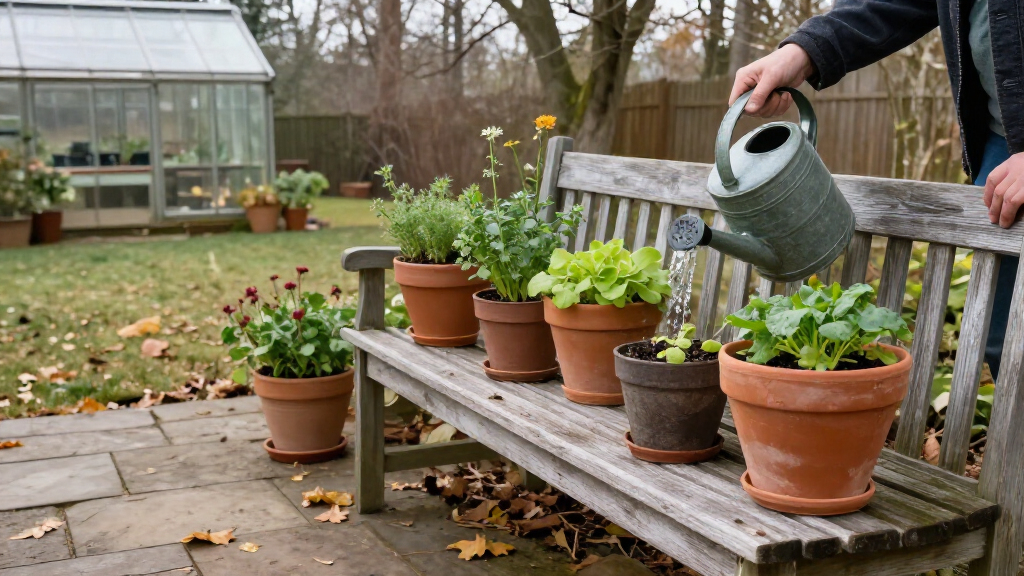
On departure day, water only containers that need it under their usual care routine. Let excess water drain, empty saucers and decorative outer pots, and check that drainage holes are not blocked. Grouping compatible pots may make care easier, but the report warns against putting November edibles in a dark corner simply to conserve moisture. Keep a clear route to the door, and do not treat a sheltered outdoor spot as protection from frost.
Preventing Dry Pots and Standing Water
Container plants have a limited reserve of moisture, and their roots do not have the surrounding soil that can insulate in-ground plants, the report says, citing UF/IFAS vacation plant-care guidance. That makes a single blanket instruction—water everything before leaving—poorly suited to a mixed patio of different plants, pot sizes and exposures. A container that is already wet may need no additional water, while a small, exposed pot that dries quickly may need a person to check it.
The approach also addresses two different risks: plants drying out and water collecting where it should drain. Recording each pot’s location and needs helps a traveler make practical arrangements before departure, including asking a helper to check a particular container rather than giving vague instructions to water the patio. The plan is about maintaining existing herbs and vegetables, not promising new growth or a harvest over a long weekend.
Products Worth Considering

Husqvarna Automower 410iQ Wire-Free Robotic Lawn Mower

EGO POWER+ LB5302 Cordless Electric Leaf Blower Kit with 2.5Ah Battery

EAGLE PEAK 12 × 8 ft Walk-In Pop-Up Greenhouse with Support Pole
As an affiliate, we earn on qualifying purchases.
A Patio Plan Built Around Each Pot
The Planet Natural report draws on the writer’s experience arranging containers on a small Philadelphia rental patio in 2018. The writer says the layout began by marking the walking route before grouping pots, leaving room to carry groceries. For holiday travel, that same practical constraint matters: a care setup should not obstruct the entrance or make containers difficult to reach.
The report recommends sketching three broad areas: exposed outdoor pots that can stay in place, a brighter sheltered outdoor area for compatible containers, and an indoor location only for plants suited to indoor conditions. It cites Royal Horticultural Society holiday-care advice for grouping and relocating pots, while cautioning that shade recommendations aimed at warm-weather trips should not be applied to November edibles without considering their light needs.
Weather changes the plan. Freezing conditions require a separate decision about whether a plant can tolerate the cold; a damp pot beside a wall is not a freeze-protection measure. Mild, drying weather may make reduced exposure and grouping useful if plants still receive suitable light. Persistently wet weather calls for attention to drainage and standing water, not automatic extra watering.
Forecasts and Plant Needs Vary
The report does not give a single watering interval or temperature trigger that applies to every edible container. How long a pot stays moist depends on the plant, potting mix, recent drying pattern and weather, not pot size alone. The report also does not identify the plants or conditions in any individual reader’s garden; growers need to check their own plants’ requirements against the local forecast.
It is also unclear whether a particular pot can safely be moved indoors or left outside without knowing its species, available light, drainage and household conditions. A sheltered outdoor position is not necessarily frost-free, and an indoor spot is not automatically suitable. The source offers planning guidance, not a guarantee that a plant will remain healthy during a given trip.
Recheck Pots Before Departure
Several days before leaving, list each container, check the full travel-period forecast and assign a destination or helper where needed. On departure day, review the forecast again, feel the potting mix, inspect drainage and water only plants that need it. Leave written instructions for anyone checking the pots, including which containers to inspect and whether they should be watered.
When the traveler returns, check the plants and any collected water, then resume their normal care based on their condition. The report provides no single post-trip schedule; follow-up depends on what each pot needs.
Key Questions
Should I water every edible pot before leaving?
No. The report recommends checking each pot and watering only if it needs water under its usual care routine. Let excess drain and empty any water left in saucers or outer pots.
How should I decide whether a pot stays outdoors?
Identify the plant, check its cold tolerance against the forecast for the full trip and consider its exposure to wind, rain and sun. A sheltered outdoor spot does not necessarily protect a plant from frost.
Can I move all my herbs indoors?
Not without checking what each plant needs. The report says to identify plants and choose an indoor position with suitable light and drainage, rather than treating “herbs” as one group with the same requirements.
What should I ask a helper to do?
Give the helper a specific list of pots to check and their needs. The report recommends noting moisture and drainage conditions in advance instead of asking someone simply to water everything.
Does a larger pot always stay moist longer?
No. The report says pot size alone cannot determine how long a container can be left. Plant type, potting mix, recent drying patterns and the forecast also matter.
Source: planetnatural.com