If you want quick, reliable frost removal, a built-in car heater is your best option because it uses engine heat and warms your entire cabin efficiently. A 12V fan is portable and easy to use, blowing air to clear frost and improve airflow but doesn’t generate heat itself. For the fastest defrosting, a combination of both can work well. To discover more tips on choosing the best way to clear frost, keep exploring your options.

Get garden gear delivered free with Prime
- Fast, free delivery on millions of items
- Prime Video, Amazon Music and more included
- Member-only deals all year
Key Takeaways
- Built-in car heaters efficiently defrost windows using engine heat, while 12V fans improve airflow but do not generate heat.
- Portable 12V fans are easy to install and ideal for quick frost clearing or supplementing vehicle heating.
- Car heaters provide consistent warmth for longer trips, whereas fans are cost-effective for short-term frost removal.
- Built-in systems are more fuel-efficient and integrated, while fans consume minimal power and are portable.
- Combining both can optimize frost removal and cabin comfort depending on specific needs and vehicle setup.
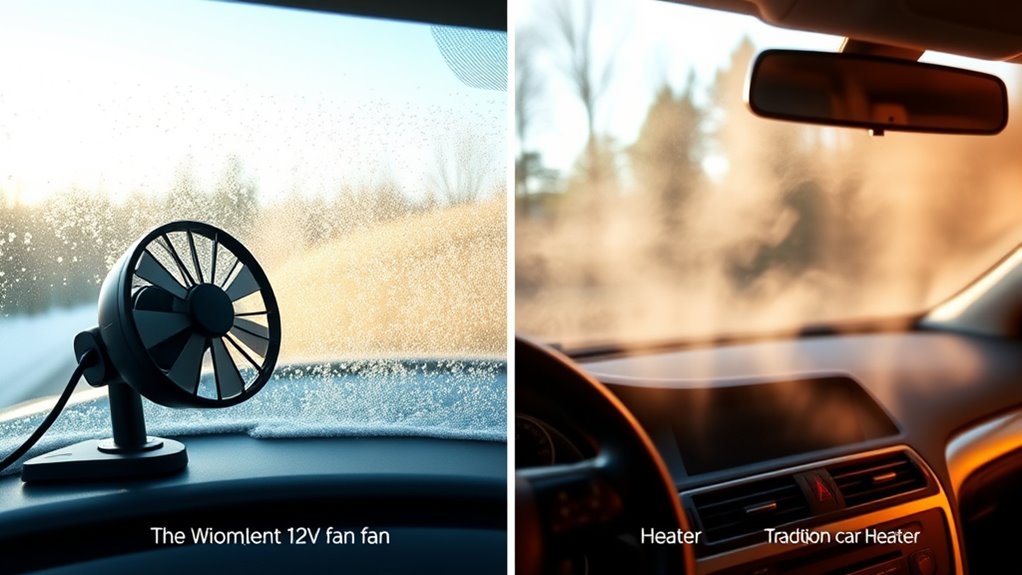
When it comes to staying comfortable in your car, choosing the right heating or cooling device makes all the difference. If you’re trying to clear a frosty windshield quickly or keep the cabin warm during winter, understanding your options is essential. Two common solutions are a car heater and a 12V fan. While they serve different purposes, your choice depends on your priorities, like fuel efficiency and installation ease.
A car heater, especially those built into your vehicle, offers reliable warmth. They’re designed to work with your engine’s cooling system, using engine heat to warm the cabin. This means they’re generally more fuel-efficient, since they don’t require additional power sources beyond your car’s engine. However, installing a portable heater can be more complex and might involve some technical knowledge, especially if you’re considering aftermarket options. Built-in heaters, on the other hand, are already integrated, making them easy to operate with just a turn of a knob. They’re excellent for defrosting windows quickly and maintaining a comfortable temperature during long commutes. Moreover, the efficiency of a vehicle’s heater can be affected by the age and maintenance of your car, emphasizing the importance of choosing a best heat pump if upgrading your vehicle’s heating system. Additionally, some modern vehicles are equipped with advanced climate control systems that optimize heating and cooling for maximum comfort and efficiency.
On the flip side, a 12V fan is a simple, portable device that blows air to help clear frost or circulate warm air. It’s lightweight, inexpensive, and very easy to set up—often just plug-and-play into your vehicle’s 12V socket. Since it consumes minimal power, it’s also quite fuel-efficient in the sense that it doesn’t strain your vehicle’s engine or battery. But keep in mind, a fan doesn’t produce heat itself; it merely moves existing air around. If your goal is to defrost a windshield, a fan can speed up the process by improving airflow, especially when paired with a defrosting spray or a small portable heater. Using a fan in conjunction with a portable heater can sometimes mimic the performance of a more integrated heating system, especially in vehicles with less effective built-in heating. It’s also worth noting that air circulation plays a crucial role in preventing frost buildup and maintaining clear windows during winter weather.
Additionally, understanding how projector contrast ratio impacts visual clarity can be helpful when considering accessories like in-car entertainment systems, which can make long drives more enjoyable.
Choosing between a car heater and a 12V fan depends on your specific needs. If you want quick, effective warmth and have the space and skills for installation, a built-in heater is your best bet. Its fuel efficiency and seamless integration make it a reliable choice. If you’re looking for a budget-friendly, portable option that’s easy to use and doesn’t require installation, a 12V fan can be incredibly handy, especially during sudden weather changes or short trips. Combining the two can also be effective: use a fan to enhance airflow and a heater for real warmth when needed. Ultimately, your decision hinges on balancing comfort, ease of use, and efficiency to stay safe and clear on the road.
Products Worth Considering

Solo Stove Bonfire 2.0 Smokeless Wood-Burning Fire Pit with Stand, Silver

Weber Searwood 600 Wood Pellet Smoker Grill, Black

Solo Stove Ranger 2.0 15-Inch Smokeless Fire Pit with Stand
As an affiliate, we earn on qualifying purchases.
Frequently Asked Questions
Which Option Consumes Less Energy for Defrosting?
A 12V fan generally consumes less energy for defrosting than a car heater. It’s more energy-efficient because it uses less power, making it ideal for quick, targeted airflow to clear frost. If you want to save on power consumption and reduce energy use, the 12V fan is your best option. It’s perfect for short-term defrosting without draining your car’s energy resources.
Are 12V Fans Effective in Extreme Cold Conditions?
In extreme cold, 12V fans aren’t very effective because their small motors struggle with low temperatures, impacting battery life and making them less reliable. They can produce noise, which might be distracting during cold mornings. While they’re portable and energy-efficient for mild conditions, in severe cold, a car heater is more dependable, providing consistent warmth and faster defrosting, ensuring clearer visibility and safer driving.
Can Both Devices Be Used Simultaneously?
Yes, you can use both devices simultaneously, but you need to take into account power consumption and device compatibility. Running a car heater and a 12V fan together might strain your vehicle’s power system, especially if your battery isn’t in top shape. Make sure both devices are compatible with your car’s electrical setup, and monitor their usage to prevent draining your battery. Always prioritize safety and efficiency when combining heating and cooling devices.
Do These Devices Require Professional Installation?
You don’t need professional installation for either device, but you should consider installation concerns and safety considerations. Both are designed for easy setup; however, verifying proper placement and secure connections is essential to avoid hazards. Read the user instructions carefully, and if you’re unsure about electrical connections or mounting, consulting a professional can help ensure safe, effective use and prevent potential damage or safety risks.
How Long Does It Take to Clear Frost With Each?
It typically takes around 5-15 minutes for a car heater to clear frost, offering faster defrost speed compared to a 12V fan. The heater’s warmth melts the frost quickly, especially if you turn it on early. Meanwhile, a 12V fan may take longer, sometimes up to 20 minutes, as it relies on airflow rather than heat. Your choice depends on how quickly you need frost removal.
Conclusion
Ultimately, choosing between a car heater and a 12V fan is like picking between a warm hug and a gentle breeze. If you want quick, effective defrosting, the heater’s your best bet. But if you prefer a quiet, energy-efficient option, a fan can do the trick. Think of it as steering through a frosty maze—you’ll find the right tool to clear your view and get you back on the road, safe and sound.