
To ensure your rafters can handle your ceiling fan’s weight plus accumulated snow, you need to consider both factors carefully. Most standard fans weigh around 10-20 pounds, but heavy snow can add significant stress, especially on outdoor fans in winter. If your rafters aren’t rated for this combined load, you risk structural damage or failure. Check your roof and rafter specifications and consider reinforcement if needed; understanding these details helps protect your home during snow seasons. Keep reading to learn more.

Get garden gear delivered free with Prime
- Fast, free delivery on millions of items
- Prime Video, Amazon Music and more included
- Member-only deals all year
Key Takeaways
- Ensure rafters are rated to support both the fan’s weight and potential snow accumulation.
- Metal blades and sturdy mounts increase the fan’s ability to withstand snow load.
- Regularly clear snow and ice from outdoor fans to prevent excessive weight stress.
- Verify mounting hardware is rated for outdoor use and higher load capacities.
- Consider reinforcing rafters or installing snow covers for added safety in heavy snow conditions.
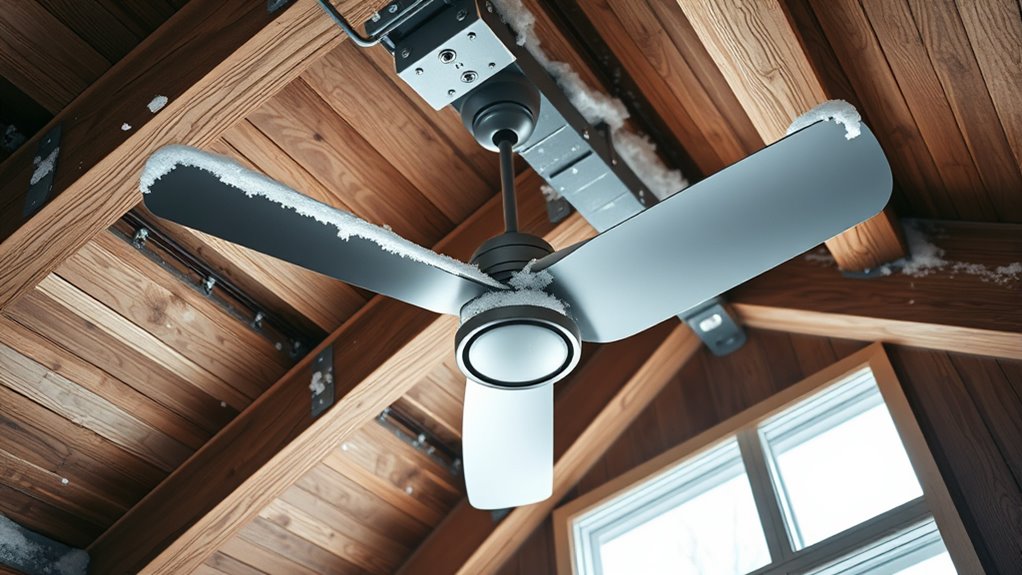
Have you ever wondered how snow accumulation impacts ceiling fans installed outdoors or in cold climates? When snow piles up on rooftops or drifts against exterior walls, it can influence the performance and safety of your ceiling fans, especially if they’re exposed to the elements. One key factor to consider is the material of your fan blades. Fan blade materials, such as wood, plastic, or metal, can affect how well your fan withstands snow and moisture. For instance, metal blades tend to be more durable against cold and wet conditions but might be heavier, which brings up concerns about ceiling fan mounting. If your fan isn’t securely mounted or if the mounting system isn’t designed to handle extra weight, snow accumulation can pose serious risks.
Snow buildup on outdoor ceiling fans can compromise safety; choose durable blades and secure mounting for winter resilience.
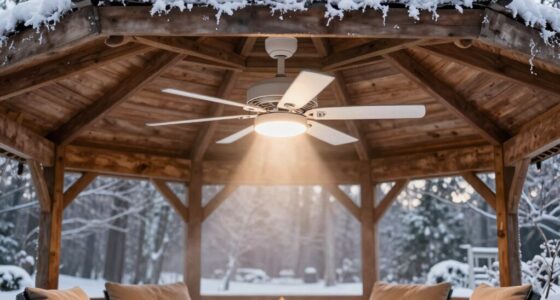
When installing outdoor or cold-climate ceiling fans, you need to pay careful attention to the ceiling fan mounting. A sturdy, well-designed mount ensures that the fan can support not only its own weight but also additional loads from snow and ice. If the mounting isn’t robust enough, the combined weight of snow and the fan can cause damage to the mounting bracket, or worse, lead to the fan falling. It’s wise to choose mounting hardware rated for outdoor use and capable of supporting extra load. In some cases, you might need a reinforced mount or an anti-snow cover to prevent snow buildup on the blades and motor. Additionally, considering the weather-resistance features of your fan can help extend its lifespan and safety during winter conditions. Proper installation techniques are crucial to ensure your fan remains secure throughout the season.
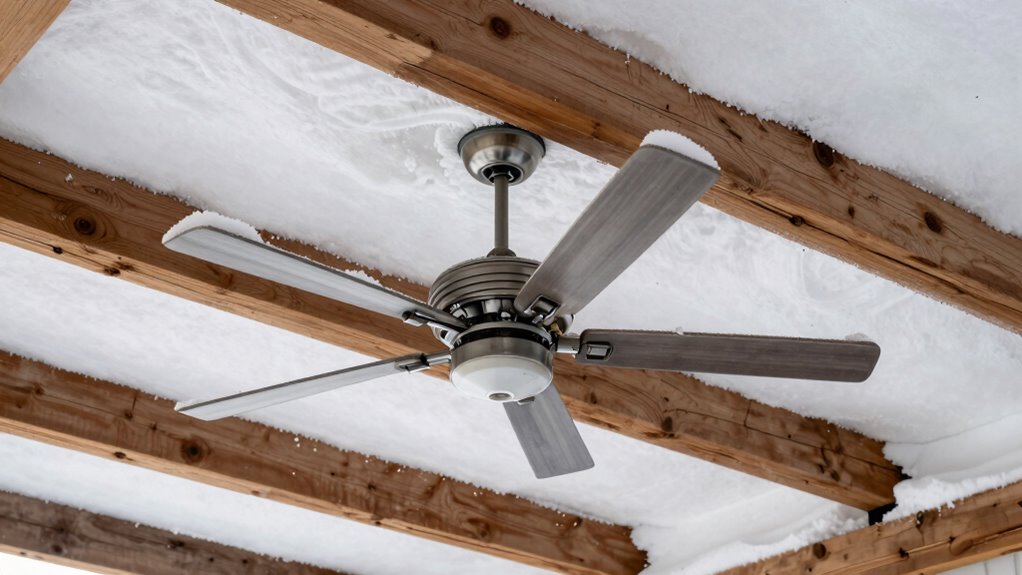
Snow accumulation on ceiling fans can also impact their operation. If the blades become weighted down or icy, the fan motor may struggle to turn or may burn out prematurely. This is especially true if your fan blades are made from lighter materials like plastic, which may crack or warp under heavy snow or ice. Conversely, fans with heavier metal blades might handle snow better but require a stronger mounting system to support the added weight. Regular maintenance, like removing snow or ice from the blades and ensuring the mounting remains secure, helps prevent accidents or costly repairs. Furthermore, proper load‑planning can help determine whether your current setup can handle winter conditions safely.
In cold climates, you should also contemplate the overall design of your ceiling fan system. Fans specifically built for outdoor use are typically designed with weather-resistant materials and stronger mounting options. These features help ensure your fan remains functional and safe despite snow and ice. Remember, the weight of accumulated snow isn’t just a minor concern; it can threaten the structural integrity of your ceiling and the safety of everyone below. So, evaluate your fan’s materials, ensure proper ceiling fan mounting, and stay vigilant about snow buildup to keep your outdoor living space safe and enjoyable during winter.
Products Worth Considering

Sylviera 6 × 4 ft Walk-In Greenhouse with Hygrometer

Rachio 3 Smart Sprinkler Controller, 16-Zone

VEVOR Walk-in Tunnel Greenhouse, 15 x 7 x 7 ft Hoop House with Watering System
As an affiliate, we earn on qualifying purchases.
Frequently Asked Questions
How Do I Calculate My Ceiling Fan’s Total Weight?
To calculate your ceiling fan’s total weight, start by checking the fan’s specifications for the fan weight, usually listed in the product details. Then, add any accessories or additional components. Use a load calculation approach by summing the fan weight and other load factors, ensuring your rafters can support this combined weight safely. Always double-check manufacturer guidelines and consult a professional if needed.
What Materials Are Best for Supporting Heavy Snow Loads?
Did you know that heavy snow loads can add up to 50 pounds per square foot? For supporting this, steel or engineered wood are your best bets for Rafter reinforcement. These materials offer exceptional strength and durability against snow accumulation. Using steel beams or reinforced engineered wood helps your rafters withstand heavy snow, ensuring your roof stays secure in winter storms. Always consult a structural engineer for precise reinforcement needs.
How Often Should I Inspect My Rafters for Snow Damage?
You should conduct a snow load assessment and inspect your rafters at least once after each significant snowfall, especially when heavy snow accumulates. Regular rafter inspection frequency helps catch any signs of damage or weakness early. Look for cracks, sagging, or loose connections. If you notice issues, don’t delay repairs to prevent structural failure. Staying proactive guarantees your rafters remain strong enough to support snow loads safely.
Can Ceiling Fan Weight Affect My Home’s Energy Efficiency?
Ceiling fan weight can impact your home’s energy efficiency if it affects the fan’s design or installation. A heavier fan might cause wobbling or noise, leading you to run it less often, reducing energy savings. Proper ceiling fan design ensures stable operation, maximizing air circulation and efficiency. Make sure your fan is properly installed and balanced to maintain ideal energy efficiency and comfort in your home.
What Safety Measures Prevent Ceiling Fan or Rafter Failure?
Ironically, your rafters are probably safer than you think—if you prioritize installation safety. To prevent ceiling fan or rafter failure, guarantee proper mounting and use approved hardware. Reinforce rafters if needed, especially in areas with heavy snow loads. Hiring a professional guarantees correct installation, reducing risks. Regularly inspect your ceiling fan and rafters for signs of stress or damage, so you can act before failure happens.
Conclusion
Make sure your rafters can handle the weight of your ceiling fan and the snow that might settle on it. Picture a cozy winter scene where snow gently blankets your roof, adding weight that your sturdy beams must support. If your rafters aren’t strong enough, that peaceful winter moment could turn into a worry. Check your load limits now, so your home stays warm, safe, and beautiful, no matter how heavy the snow falls.