
TL;DR

Get garden gear delivered free with Prime
- Fast, free delivery on millions of items
- Prime Video, Amazon Music and more included
- Member-only deals all year
Exposed roots are common as trees mature and do not necessarily mean a tree is unhealthy. Arborists quoted by Country Living advise against cutting or repeatedly mowing over them; safer options include a shallow layer of suitable mulch, limited sandy-loamy soil, or shade-tolerant planting.
Exposed tree roots are common as trees mature, and cutting them or piling deep soil over them can damage the tree, according to arborists quoted in a Country Living report. The report recommends leaving roots alone where possible, or covering them with a limited layer of mulch while keeping the trunk’s root flare visible.
Tree roots grow near the surface because they need access to oxygen, water and nutrients. Barbara Fair, a certified arborist and North Carolina State University extension specialist, told Country Living that roots grow where those resources are easiest to obtain. Most roots extend laterally rather than deep underground; Fair said the root system may spread two to three times beyond the tree’s drip line, the reach of its outer branches.
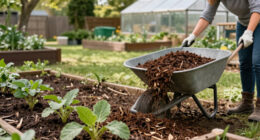
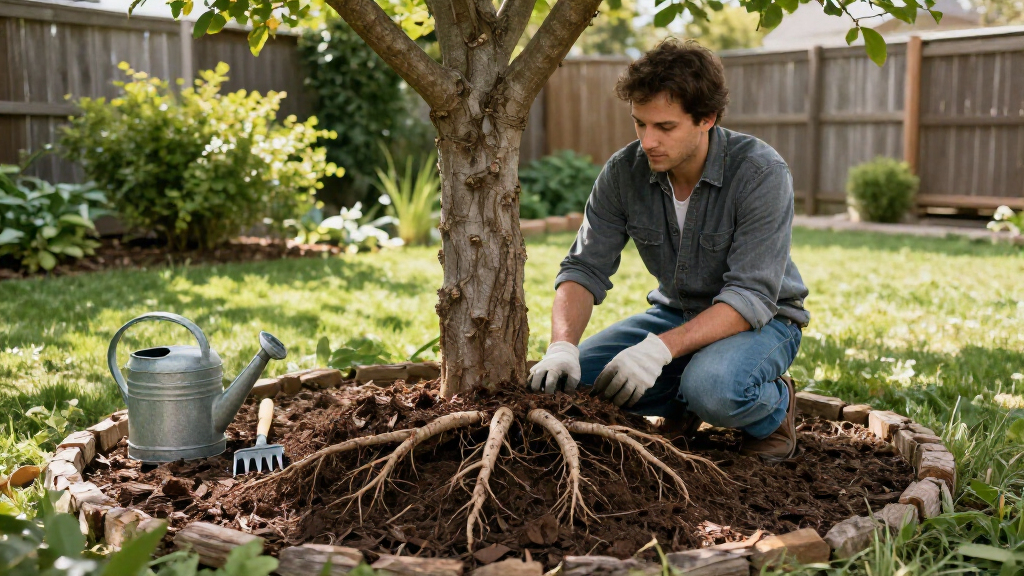
To cover roots, Fair recommends adding no more than two inches of sandy, loamy soil. A deeper layer can deprive roots of oxygen and harm the tree, and the source says this approach may need repeating as roots continue to grow. Another option is two to three inches of organic mulch, such as wood chips or pine straw, spread over the roots toward the drip line. Keep mulch a few inches from the trunk so the root flare remains visible; the report advises against using rocks.
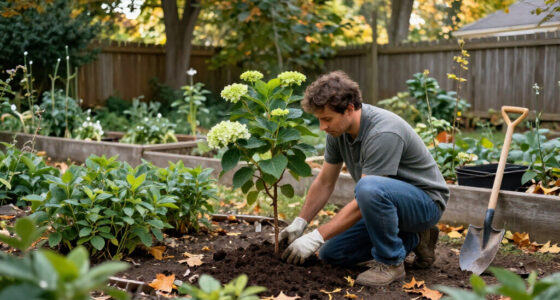
Groundcover or shade-tolerant perennials, including ferns and hostas, can also soften the area. Planting should avoid injuring roots, Fair said, and is easier while a tree is young or with bare-root plants that need smaller holes. Where roots lift a sidewalk or create another structural concern, Blake Watkins, a master arborist, advises consulting a certified arborist about options that do not compromise the tree’s stability or health.
Protect Roots Without Harming Trees
Surface roots can create mowing and tripping hazards and make a lawn look uneven, but attempts to remove them may create a greater problem. Mary Carol Sheffield, a certified arborist and University of Georgia extension agent, told Country Living that cutting roots can affect a tree’s long-term health. Repeated mower strikes can also leave wounds that make a tree more susceptible to pests and disease.
The advice matters because the roots are part of the tree’s support system, not simply an eyesore. Covering them too deeply can also cause harm. A restrained approach—protecting roots from equipment, using a thin layer of mulch, or getting expert help around pavement—addresses the practical issue without assuming that every exposed root needs removal.
Products Worth Considering

Traeger Woodridge Pro Wood Pellet Grill and Smoker, 970 sq. in., WiFIRE

Solo Stove Bonfire 2.0 Smokeless Wood-Burning Fire Pit with Stand, Silver

Weber Searwood 600 Wood Pellet Smoker Grill, Black
As an affiliate, we earn on qualifying purchases.
Why Roots Reach the Surface
Exposed roots often appear as a tree matures and are not, by themselves, proof that it is in poor health. The report says soil and site conditions can influence where roots grow. Compacted soil, including soil affected by construction, may make it difficult for roots to grow downward. Frequent shallow lawn irrigation can also encourage roots to remain near the surface.
Some trees are naturally associated with shallow roots, including redwoods, camphors, Southern magnolias, maples, sycamores and willows. Watkins said the roots may reflect the growing site more than a problem with the tree. The report also notes that grass and tree roots compete for water and nutrients, so a lush lawn beneath a large tree may be difficult to establish.
For established trees, Watkins recommends watering during drought. The report describes slow watering for a few hours about once a month as one approach, and says irrigation systems can use bubbler emitters to deliver more water to trees. These are source-reported suggestions, not a universal schedule: water needs depend on local conditions and the tree.
“This affects the long-term health of the tree and could cause a decline.”
— Mary Carol Sheffield, certified arborist and University of Georgia extension agent, as quoted by Country Living
When Roots Signal a Concern
The source report does not offer a single diagnosis or remedy for every tree. Whether exposed roots indicate a site issue, a species trait or another condition depends on the tree and its surroundings. The material also does not specify a watering schedule that applies across climates, soil types and tree species.
It is not clear from the report how a particular tree will respond to covering or nearby planting. If roots are lifting pavement or there are concerns about stability, an on-site assessment by a certified arborist is needed; the article does not identify a universal way to cut, redirect or remove roots safely.
Choose a Low-Impact Remedy
For roots that are not causing structural problems, the steps described in the report are to avoid cutting and repeated mower contact, then consider a shallow mulch layer or carefully chosen groundcover. If adding soil, keep it to two inches at most and use the sandy-loamy material Fair recommends. Keep mulch away from the trunk and retain a visible root flare.
Where roots affect a sidewalk or pose a significant hazard, contact a certified arborist before altering them. The report does not announce a new regulation or formal program; it offers practical guidance, and the appropriate next step depends on the tree and the specific site.
Key Questions
Should I cut exposed tree roots?
Avoid cutting them unless a qualified arborist has assessed the situation. The arborists quoted by Country Living warn that cutting can harm a tree’s health and that mower injuries can leave roots vulnerable to pests and disease.
Can I cover exposed roots with soil?
The report says to use no more than two inches of sandy, loamy soil. A much deeper layer can suffocate roots. The soil may need replenishing as roots grow, so it is not necessarily a permanent fix.
What is a safer way to cover tree roots?
Use two to three inches of organic mulch, such as wood chips or pine straw, and leave a few inches of space around the trunk so the root flare stays visible. The report advises against rocks.
Can I grow grass beneath a tree with surface roots?
Grass may struggle because it competes with tree roots for water and nutrients, particularly beneath large shade trees. The report suggests considering shade-tolerant groundcover or perennials instead, planted carefully to avoid root damage.
When should I call an arborist?
Contact a certified arborist if roots are lifting a sidewalk or creating another structural concern. An arborist can assess site-specific options without assuming that the roots should be cut.
Source: countryliving.com