
Ceiling height greatly affects how well your fan circulates air and keeps you comfortable. If your ceilings are high, a fan with a longer downrod helps position the blades closer to the living space, ensuring better airflow. Low ceilings require careful placement to avoid drafts and noise. Properly installed fans can improve air movement, reduce energy use, and prevent uneven temperatures. To discover more about optimizing fan performance based on ceiling height, keep exploring the details.
Key Takeaways
- Ceiling height affects how effectively ceiling fans circulate air across the room.
- High ceilings require longer downrods to position blades closer to the living space.
- Low ceilings can cause drafts and noise if fans are mounted too close to the ceiling.
- Proper fan placement improves energy efficiency by optimizing airflow and reducing HVAC workload.
- Tailoring fan size and mounting height based on ceiling height ensures optimal performance and comfort.
The height of your ceiling directly impacts how well your ceiling fan performs, influencing both air circulation and comfort levels. When the ceiling is too high, your fan struggles to move air effectively across the room. This can lead to stagnant air near the floor and insufficient airflow at the occupant level, making the space feel less comfortable. Conversely, if the ceiling is too low, the fan might create a feeling of draftiness and noise, which can be distracting or uncomfortable. Essential air circulation depends on choosing the right fan size, blade pitch, and mounting height, all tailored to your ceiling’s height. Properly positioned fans enhance air movement, making rooms feel cooler or warmer as needed, without overworking the motor, which directly relates to energy efficiency. Automation in ventilation technologies are increasingly used to optimize airflow and maintain consistent temperatures in modern homes.
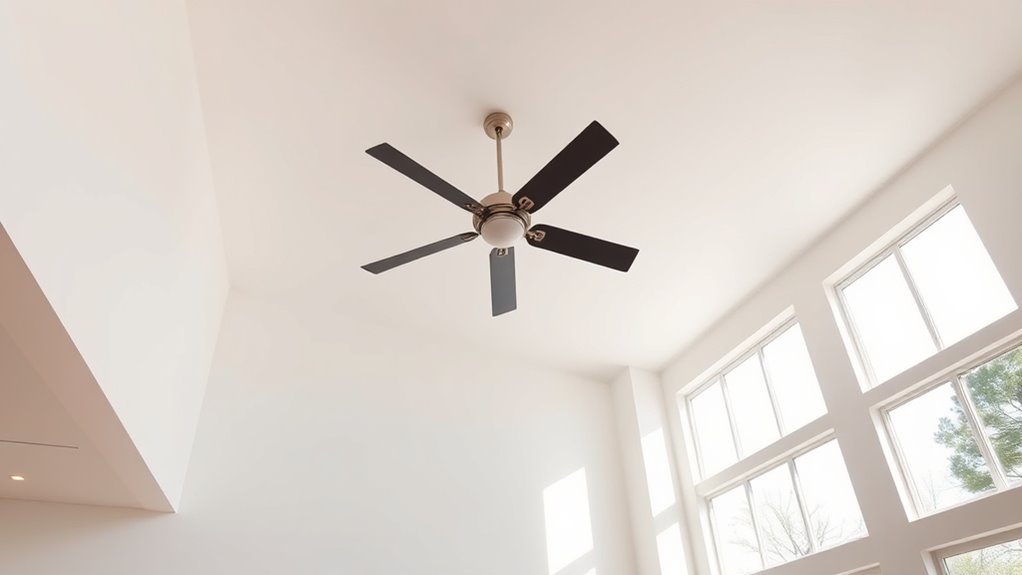
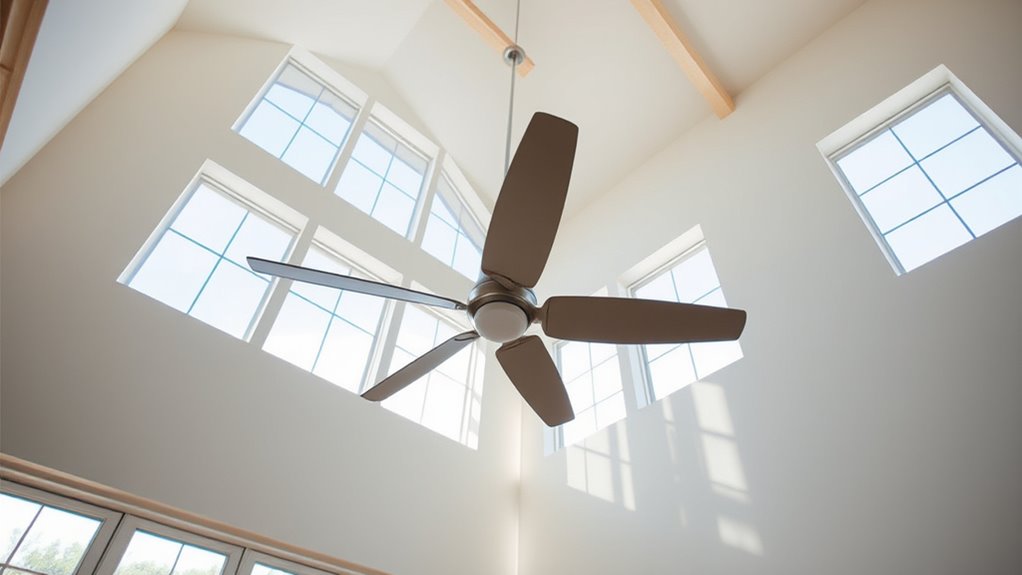
In rooms with high ceilings, you’ll want to consider installing fans with longer downrods. This extension helps position the blades closer to the living space, improving air circulation. When the fan is mounted too close to the ceiling, it can generate a vortex that circulates air in circles rather than pushing it downward, reducing overall effectiveness. Proper placement ensures your fan distributes air evenly, which not only boosts comfort but also helps you save on energy costs. Efficient airflow means your HVAC system doesn’t have to work as hard to maintain a comfortable temperature, leading to lower energy bills and a smaller carbon footprint. This is especially vital in larger, open spaces where poor air circulation can cause uneven temperatures and discomfort.
Frequently Asked Questions
How Does Ceiling Height Affect Ceiling Fan Size Selection?
When choosing a ceiling fan, you need to take into account ceiling height considerations to guarantee ideal airflow. If your ceiling is high, go for a larger fan size to distribute air effectively across the room. Conversely, for lower ceilings, select a smaller, flush-mount fan to avoid obstruction. Proper fan size selection depends on ceiling height, helping you maximize comfort and efficiency in your space.
Can High Ceilings Cause Noise Issues With Ceiling Fans?
They say “a noisy fan can spoil the breeze,” and high ceilings can sometimes cause sound amplification. You might notice more noise because the air circulation creates vibrations that echo in the open space. To minimize this, guarantee your fan is properly balanced and installed at the right height. Using quieter fan models also helps reduce noise issues, making your space more comfortable without sacrificing effective airflow.
What Is the Ideal Ceiling Height for Optimal Fan Efficiency?
For ideal fan efficiency, aim for a ceiling height of around 8 to 10 feet. This height enhances ventilation effectiveness by allowing the fan to circulate air properly without creating noise issues. Additionally, it balances aesthetic considerations, making your space look proportionate and comfortable. If ceilings are higher, consider installing downrods to maintain efficiency and visual appeal. Proper height ensures you enjoy better airflow and a more pleasing room environment.
Do Different Ceiling Heights Require Different Fan Blade Angles?
Different ceiling heights do require different blade angles to optimize airflow efficiency. If your ceiling is higher, you should choose a fan with a steeper blade angle to move air effectively across the larger space. Conversely, lower ceilings benefit from fans with a shallower blade angle, preventing excessive noise and ensuring smooth airflow. Adjusting blade angles according to ceiling height guarantees your fan operates efficiently and keeps the room comfortable.
How Does Ceiling Height Influence Energy Consumption of Ceiling Fans?
You might wonder how ceiling height influences energy consumption of ceiling fans. Taller ceilings often require fans to work harder to circulate air effectively, which can increase energy use. However, choosing the right size and speed helps optimize air circulation and energy savings. Properly balanced fans ensure efficient air movement, reducing energy waste. So, adjusting your fan settings based on ceiling height can improve comfort while keeping energy costs lower.
Conclusion
In summary, ceiling height can make or break your fan’s performance—it’s like the secret ingredient to perfect airflow. If your ceilings are too high, your fan might struggle to circulate air effectively, leaving you feeling like you’re in a windless desert. But with the right height, you’ll enjoy cool, invigorating breezes that feel almost magical. Don’t overlook this essential detail—your comfort depends on it, and you’ll wonder how you ever lived without it!