To tell if your patio is too enclosed for a misting setup, check how well air flows through the space. Stand in different areas and feel for fresh air movement; stagnant air signals poor circulation. Look for high walls, fences, or screens that trap humidity and create dampness or mold. Limited airflow can cause mist to settle and be less effective. Keep exploring to find out more ways to improve your patio’s airflow and misting success.

Get garden gear delivered free with Prime
- Fast, free delivery on millions of items
- Prime Video, Amazon Music and more included
- Member-only deals all year
Key Takeaways
- Check for stagnant air by standing in the patio and feeling for fresh breezes; lack of airflow indicates poor ventilation.
- Observe if mist settles or causes dampness, suggesting inadequate airflow to disperse and evaporate moisture.
- Look for structural features like high walls, fences, or enclosed corners that block breezes and trap humidity.
- Notice mold, damp furniture, or increased moisture, which signal insufficient airflow and poor mist dispersal.
- Ensure there are enough openings or vents; limited or blocked access points reduce effective airflow for misting.
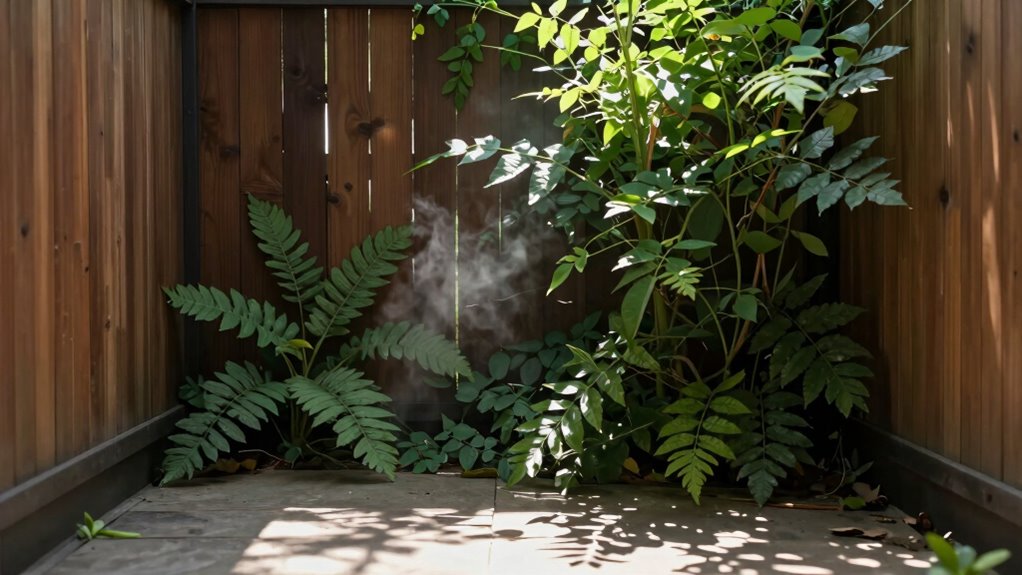
If you’re considering installing a misting system on your patio, it’s important to determine whether your space is suitable. Enclosed patios can be tricky because the effectiveness of misting relies on proper airflow and open space. To figure out if your patio is too enclosed, start by assessing the layout. If your outdoor area is surrounded by high walls, fences, or screens that block the breeze, the mist might not disperse well. Instead of cooling the space evenly, the water could settle in one spot, creating dampness or even mold. A good rule of thumb is to stand in your patio and see if fresh air flows freely. If you feel stagnant air or notice little movement, your enclosure might hinder the mist’s performance.
Enclosed patios with limited airflow may cause mist to settle and promote dampness or mold.
Next, consider the height and openness of your surroundings. Low ceilings or tightly enclosed corners trap humidity, which can lead to excess moisture on your outdoor furniture. If your outdoor furniture is often damp or develops mold, it’s a sign that the air isn’t circulating properly. Proper airflow is essential for a misting system to work effectively without causing damage or discomfort. If you’ve incorporated landscape lighting into your patio, check how it interacts with the space. Well-placed lighting can highlight enclosed areas, but if it’s creating dark, cramped spots, it might be a sign that your patio lacks enough openness for the mist to circulate properly.
Another factor to consider is whether your patio has adequate ventilation. If your outdoor space is covered with a roof or has limited openings, the mist can linger longer than intended, making the area uncomfortably damp. In such cases, installing fans or adjusting the landscape lighting to improve visibility and airflow can help, but only if the physical structure allows it. If your outdoor furniture is placed in a way that blocks airflow or creates tight corners, the misting system’s efficiency drops even further. Additionally, airflow quality plays a crucial role in the overall effectiveness of your misting setup. Improving air circulation or considering structural modifications can significantly enhance the cooling experience. Ensuring proper ventilation can prevent the buildup of humidity and make misting more successful. Examining your patio’s enclosure structure can provide insights into how to better facilitate airflow and optimize your misting system’s performance.
In the end, the key to determining if your patio is too enclosed is to observe how air moves around your space. If it feels cramped or stagnant, a misting system might not provide the cooling relief you’re hoping for. Instead, you might need to make structural adjustments or consider alternative cooling options. Properly integrated landscape lighting and thoughtfully arranged outdoor furniture can help create a more open feel, making misting more effective and comfortable on hot days.
Products Worth Considering

Orbit B-hyve XR 8-Zone Indoor/Outdoor Smart Sprinkler Controller
Orbit B-hyve XR 16-Zone Indoor/Outdoor Smart Sprinkler Controller

Orbit B-hyve 12-Zone Indoor/Outdoor Wi-Fi Sprinkler Controller
As an affiliate, we earn on qualifying purchases.
Frequently Asked Questions
Can I Install a Misting System Indoors?
You can install a misting system indoors, but you need to take into account indoor humidity levels first. Excess humidity can cause mold and damage. For safe misting installation indoors, make sure your space is well-ventilated and humidity is controlled. Use a low-pressure misting system designed for indoor use, and monitor humidity levels regularly. Consulting a professional can help you determine if your indoor environment is suitable for misting, ensuring comfort without compromise.
What Are Signs of Poor Airflow in My Patio?
If your patio feels like a sauna or you notice stuffy, stale air, then poor airflow is likely your culprit. Ventilation issues and limited air circulation can make your space uncomfortably hot and humid. Signs include lingering smells, moisture buildup, or feeling suffocated. If fresh air struggles to move through, it’s time to improve ventilation—like adding vents or opening up walls—to guarantee your patio stays cool and breezy.
How Does Patio Size Affect Misting Efficiency?
Your patio size affects misting efficiency because larger patios may need more coverage, while smaller ones can become overly damp. Adequate patio insulation helps retain the mist, but if your space is too enclosed with wind barriers, mist can be uneven or quickly disperse. For maximum cooling, make sure your patio isn’t overly insulated or tightly enclosed, allowing airflow to help distribute the mist evenly and improve overall comfort.
Are There Alternative Cooling Options for Enclosed Patios?
Think of your patio as a castle—if it’s too enclosed, misting might not be enough. Instead, consider shade solutions like retractable awnings or umbrellas, which offer immediate relief. Ventilation options, such as installing exhaust fans or opening windows, help circulate air and lower temperatures. These alternatives work together to cool your space efficiently, even if misting isn’t suitable due to enclosure, creating a more comfortable outdoor retreat.
How Often Should I Maintain My Misting System?
You should perform maintenance on your misting system every 3 to 6 months, depending on usage and water quality. Regular maintenance frequency helps prevent clogs and leaks, ensuring peak cooling. When troubleshooting, check for clogged nozzles, leaks, or pressure issues. Clean or replace nozzles as needed, and inspect pipes for damage. Consistent upkeep keeps your system running efficiently and prolongs its lifespan, providing reliable cooling during hot days.
Conclusion
If your patio feels like a sealed box, a misting system might turn into a damp disappointment rather than a revitalizing escape. Think of your space as a garden needing open air to breathe and circulate. If it’s too enclosed, the mist can cling and settle like unwanted guests rather than drifting away. To enjoy a cool breeze, give your patio room to breathe—otherwise, your misting setup could end up as effective as trying to cool a fire with a raincloud that never arrives.