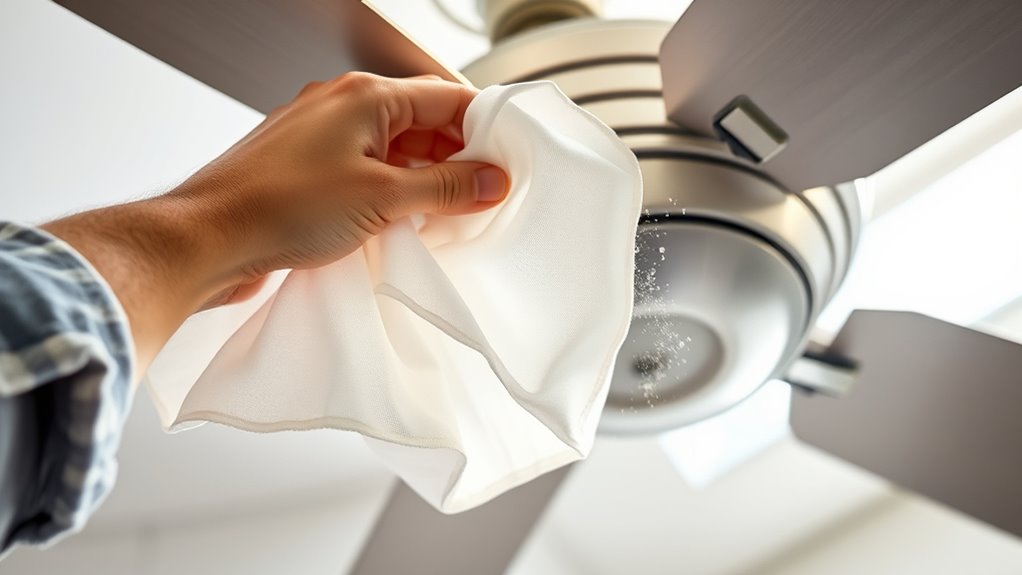

To keep your fan blades dust-free, gather supplies like a clean pillowcase, a step ladder, and microfiber cloths. Turn off and unplug the fan for safety, then slip the pillowcase over each blade, gently pressing down and pulling inward to trap dust inside. For stubborn spots, wipe with a damp cloth. Afterward, wash and dry the pillowcase. Follow these steps regularly, and you’ll discover simple tips to maintain a cleaner, better-performing fan.
Key Takeaways
- Use a pillowcase to effectively trap dust from fan blades without dispersing particles into the air.
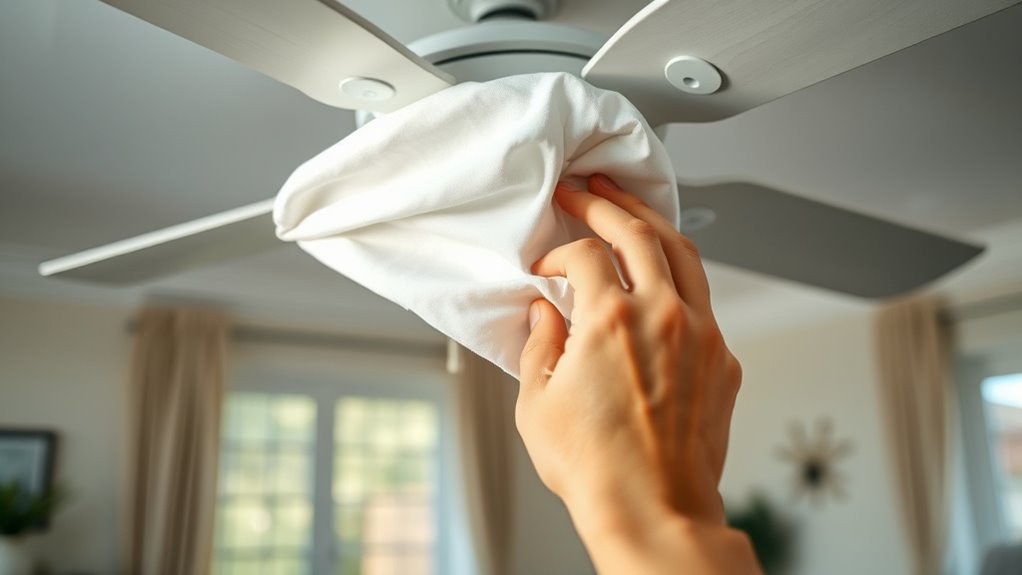
- Slip the pillowcase over each blade, pressing gently to cover the surface, then pull inward to collect dust.
- Shake out the pillowcase outside after cleaning to remove accumulated dust and prevent indoor mess.
- Turn off and unplug the fan before cleaning, and wear protective gear to ensure safety during maintenance.
- Regularly clean the pillowcase and fan blades to maintain dust-free, efficient, and long-lasting fan operation.
Gathering Your Supplies
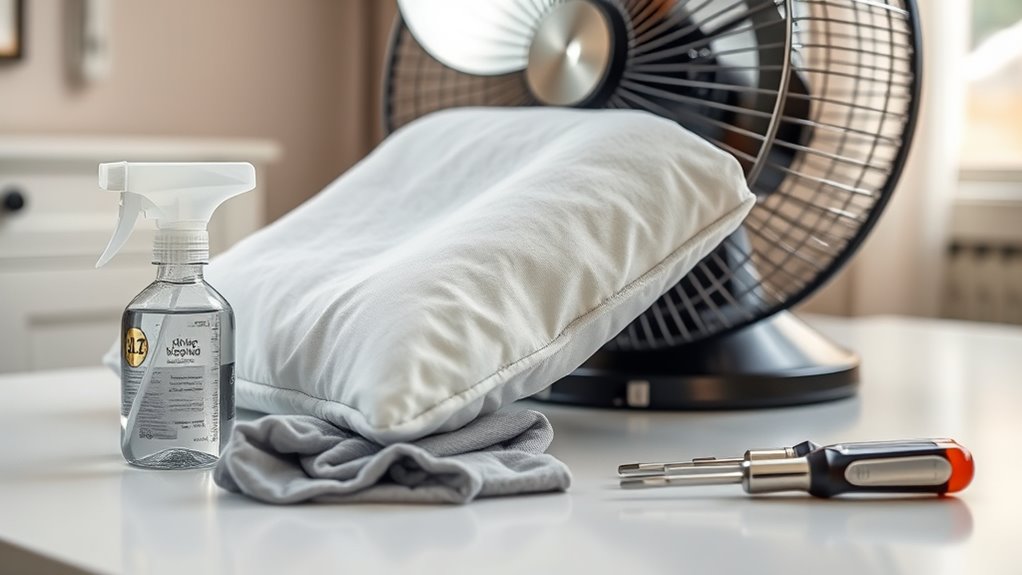
Before you begin the pillowcase method, gather all the supplies you’ll need. Start with a clean, sturdy pillowcase to trap dust effectively during the cleaning process. Next, grab a step ladder or sturdy chair to reach the fan blades safely. Keep a microfiber cloth nearby for wiping down the blades afterward. To guarantee efficient dust collection, have a small brush or duster handy for stubborn spots. Organize your supplies so everything is within arm’s reach, preventing multiple trips. Having your tools ready saves time and keeps the process smooth. Proper supply organization is key to a quick, effective cleaning. Ensuring your fan blades are clean can help reduce allergens and improve air quality by removing dust buildup. Once everything is set, you’re ready to proceed confidently, knowing dust won’t scatter everywhere and your fan blades will stay pristine.
Preparing Your Fan for Cleaning
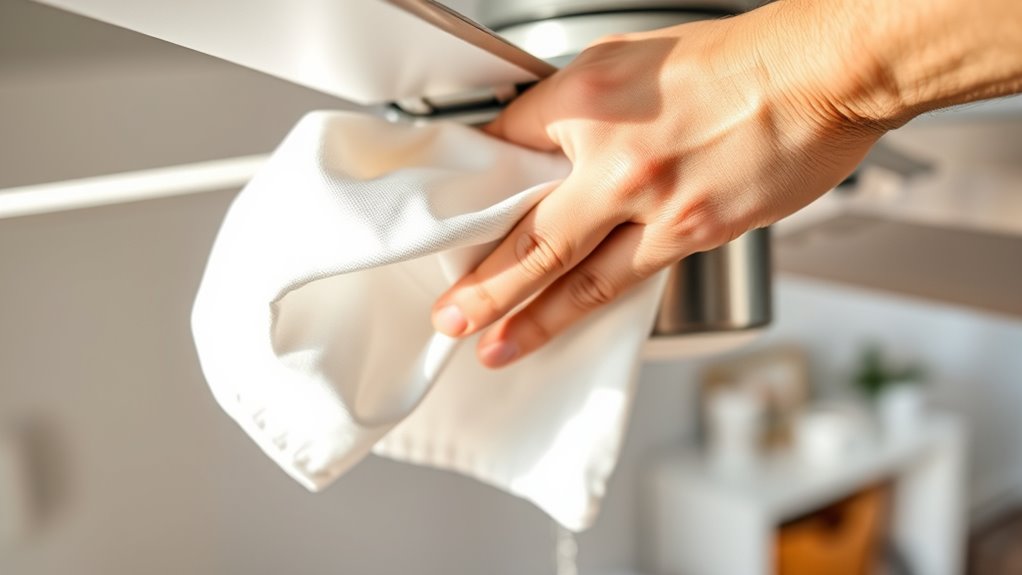
Before starting, make sure your fan is turned off and unplugged to stay safe. Gather all your cleaning supplies so you’re ready to go, and protect nearby surfaces with a cloth or paper towels. Taking these steps helps guarantee a smooth and dust-free cleaning process. Additionally, consider using essential oils for dust removal, which can help neutralize allergens and leave your space smelling fresh after cleaning.
Turn Off and Unplug
To safely clean your fan, you need to turn it off and unplug it first. This step is essential for protecting your power supply and ensuring electrical safety. Follow these steps:
- Switch the fan’s power button to the “off” position to cut power.
- Locate the plug and grasp it firmly.
- Pull the plug straight out of the electrical outlet to disconnect from the power source.
- Confirm the fan is completely unplugged before proceeding.
- Be aware that using proper safety procedures helps prevent electrical hazards during maintenance.
This process prevents accidental activation and reduces the risk of electrical shock. Always double-check that the fan’s power supply is disconnected before cleaning. Doing so keeps you safe and avoids damage to the appliance or electrical system. Unplugging is a simple but necessary step in maintaining electrical safety during cleaning.
Gather Cleaning Supplies
Gather all the cleaning supplies you’ll need to guarantee a smooth and efficient process. Start by choosing a soft microfiber cloth or pillowcase, which helps trap dust without scratching delicate fan blade materials like metal or plastic. A gentle cleaning solution or mild soap mixed with water will loosen dust particles, especially since dust particle size can vary from fine to coarse. Keep a small brush or toothbrush handy for hard-to-reach spots and crevices. You might also want a step ladder or sturdy chair if your fan is mounted high. Having everything within reach ensures you won’t have to stop mid-clean, making the process faster and more effective. Proper preparation with the right supplies minimizes dust dispersal and protects your fan’s finish.
Protect Surrounding Areas
As you prepare to clean your fan, it’s important to protect the surrounding areas from dust and water splashes. This guarantees dust containment and prevents messes. Start by laying a drop cloth or old towels under the fan to catch debris. You can also tape plastic sheets or newspaper around the base and nearby surfaces to shield them from splashes. Remove nearby objects that could be damaged or obstruct your work. If possible, turn off nearby electronic devices to avoid dust settling inside. Finally, wear protective gear such as goggles and a mask to prevent inhaling dust. These steps help maintain area protection, making your cleaning safer and cleaner, while keeping dust confined to the fan itself. Incorporating space organization techniques can also streamline the cleaning process and ensure a clutter-free workspace.
Using the Pillowcase to Remove Dust
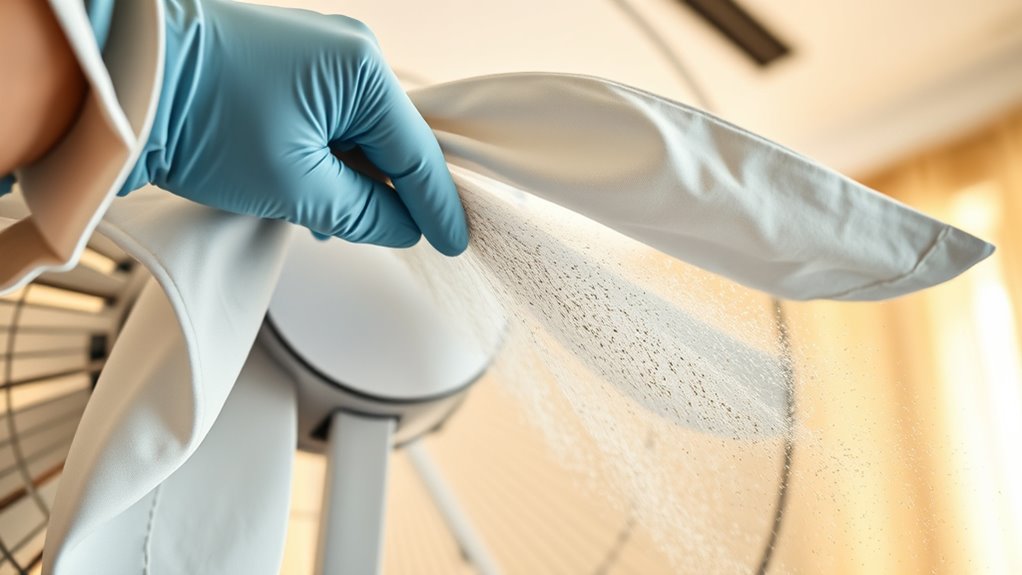
Using a pillowcase is an effective way to remove dust from fan blades without making a mess. The pillowcase technique traps dust inside the fabric, preventing it from falling onto your furniture or floor. To start, turn off and unplug your fan. Slip the pillowcase over each blade, gently pressing down to cover the surface. Then, pull the fabric inward, trapping dust on the inside of the pillowcase. This method ensures dust trapping happens directly inside the case, making cleanup easier. Repeat for all blades, and shake out the pillowcase outside to dispose of the collected dust. This simple approach minimizes airborne particles and keeps your space cleaner while efficiently removing dust from your fan blades. Proper technique also reduces airborne particles, ensuring a healthier environment during cleaning.
Handling Blades With Stubborn Dust
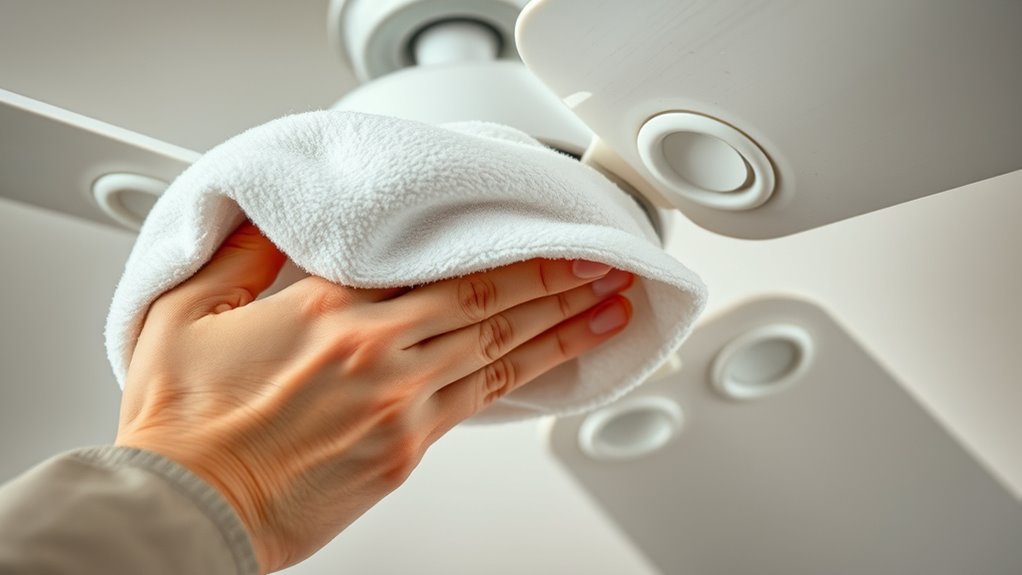
When dust clings stubbornly to your fan blades, a damp cloth can help loosen it without damage. You might also consider applying a mild cleaning solution for tougher spots, but be careful not to oversaturate. To keep dust at bay, regularly clean and maintain good airflow to prevent buildup. Additionally, proper maintenance techniques can extend the life of your fan and keep it operating efficiently.
Using a Damp Cloth
Sometimes, dust clings stubbornly to fan blades despite regular cleaning. In this case, using a damp cloth can help with dust removal. First, dampen a humid cloth with water, ensuring it’s not too wet to avoid dripping. Then, follow these steps:
- Wring out excess water to prevent streaks.
- Wipe each blade carefully, applying gentle pressure.
- Use a microfiber cloth for improved dust pickup.
- For tough spots, slightly dampen the cloth further and repeat.
Additionally, choosing the right cleaning techniques can enhance the effectiveness of your dust removal routine. This method loosens stubborn dust without harsh chemicals, making your fan safer and cleaner. Remember, a humid cloth is key to effective dust removal, especially for blades with built-up grime. Always wipe in the direction of the blades’ grain for best results.
Applying Mild Cleaning Solutions
If dust has become particularly stubborn on your fan blades, applying a mild cleaning solution can make a significant difference. Use a gentle cleaner—mix a small amount of dish soap with water or opt for a commercial mild cleaning solution. Dampen a soft cloth or sponge with this solution and gently wipe the blades, focusing on areas with heavy buildup. Employ gentle scrub techniques to loosen stubborn dust without damaging the surface. Avoid harsh chemicals or abrasive scrubbers, which can scratch or degrade the blade finish. Once you’ve treated the blades, wipe them again with a damp cloth to remove any residue. This careful approach helps lift persistent dust while maintaining the integrity of your fan blades. Additionally, ensuring proper airflow around the unit, as recommended in aero guardians, can prevent dust accumulation on the blades over time.
Preventing Dust Accumulation
After thoroughly cleaning your fan blades and removing stubborn dust, taking steps to prevent future buildup can save you time and effort. Good dust prevention improves air quality and reduces the need for frequent cleanings. To keep dust at bay: 1. Regularly dust nearby surfaces to prevent dust from settling on blades. 2. Use high-efficiency particulate air (HEPA) filters to trap airborne dust particles. 3. Keep windows and doors closed during dusty days to limit outdoor debris. 4. Schedule routine cleanings to maintain air quality and minimize dust accumulation. Implementing these tips ensures your fan blades stay cleaner longer, reducing dust buildup and improving indoor air quality. Preventing stubborn dust is easier when you take proactive measures, making maintenance more efficient and effective. Additionally, understanding how automation in industry can help optimize cleaning routines may further enhance your dust management strategies.
Cleaning the Pillowcase After Use
Once you’ve finished using the pillowcase to trap dust from the fan blades, it’s important to clean it properly to maintain its effectiveness. Start by removing the pillowcase and inspecting it for any dust buildup. To guarantee continued dust prevention, wash the fabric with warm water and a gentle detergent. Avoid using bleach or fabric softeners, as they can weaken the material over time. After washing, dry the pillowcase thoroughly, either by air-drying or on a low heat setting in the dryer. Regular cleaning of the pillowcase keeps dust from accumulating on the fabric itself, ensuring it remains an effective barrier for future uses. Proper maintenance of the pillowcase prolongs its lifespan and keeps your fan blades dust-free and clean. Additionally, using sound vibrations in cleaning tools can help loosen stubborn dust particles and enhance the cleaning process.
Tips for Effective Dust Removal

To maximize dust removal efficiency with the pillowcase method, it’s important to use the right technique during each cleaning session. First, consider fan blade design; wider or curved blades may trap more dust, requiring thorough wiping. Second, focus on dust particle size—smaller particles linger longer and cling tightly, so use gentle but firm pressure. Third, adjust your approach based on fan shape; densely packed blades need slower, more deliberate motions. Fourth, guarantee you cover all angles, especially the edges and underbelly, where dust hides. Additionally, understanding air quality can help determine how frequently you should clean your fan to maintain a dust-free environment. By tailoring your technique to the fan’s design and dust particle size, you’ll remove more dust effectively and keep your fan running smoothly and quietly.
Safety Precautions During Cleaning

Ensuring safety during fan blade cleaning is essential to prevent injuries and damage. Before starting, turn off the fan and unplug it to avoid electrical hazards. Check that power is disconnected to maintain electrical safety, especially when working near exposed wires or components. Wear respiratory protection, like a mask, if dust or debris is likely to become airborne, preventing inhalation of dust particles. Use a sturdy ladder or step stool if needed, and ensure it’s stable to avoid falls. Keep your workspace clear of clutter to prevent accidents. Never use water or liquids directly on electrical parts, as this risks short circuits. By prioritizing electrical safety and respiratory protection, you minimize risks and guarantee a safe, effective cleaning process. Home security systems can also be useful to monitor your property while you work, adding an extra layer of safety during maintenance tasks.
Maintaining Your Fan for Long-Term Shine
Regular maintenance keeps your fan looking its best and running smoothly over time. To maintain a long-term shine, focus on these key steps. First, regularly apply a quality fan blade polish to keep blades shiny and protected from dirt buildup. Second, implement dust prevention techniques such as using dust filters or covers when the fan isn’t in use. Third, clean the blades with a soft cloth and mild cleaner every few months to prevent dust accumulation. Fourth, check and tighten any loose screws or parts to ensure smooth operation. Additionally, paying attention to air quality can help reduce dust and debris settling on your fan blades. These simple actions help preserve your fan’s appearance and performance, reducing the need for frequent deep cleans. Consistent upkeep with fan blade polish and dust prevention techniques guarantees your fan stays gleaming and efficient for years.
Frequently Asked Questions
How Often Should I Clean My Fan Blades Using This Method?
You should clean your fan blades regularly to prevent dust accumulation, which can affect air quality and fan efficiency. The cleaning frequency depends on your environment, but generally, aim for once a month. If you notice more dust or allergies worsening, increase the frequency to every two weeks. Using the pillowcase method makes cleaning easier and less messy, helping you maintain a dust-free fan without hassle.
Can I Use This Technique on Ceiling Fans With Decorative Blades?
You can definitely use the Pillowcase Method on decorative ceiling fan blades. It’s great for decorative blade maintenance because it effectively traps dust without damaging intricate designs. Just be gentle around delicate details, and make sure to turn off the fan before cleaning. This method keeps your ceiling fan’s aesthetics pristine, ensuring dust doesn’t settle into carvings or patterns, and maintains a fresh look with minimal effort.
Is This Method Suitable for Fans in High-Humidity Environments?
If you’re wondering whether this method suits fans in high-humidity environments, it depends on humidity concerns and fan material compatibility. You can use the pillowcase technique, but be cautious if your fan blades are sensitive to moisture or corrosion. Confirm the material won’t be affected by humidity, and avoid excessive moisture contact. This way, you keep your fan dust-free without risking damage from moisture or humidity-related issues.
What Alternative Tools Can I Use if I Don’t Have a Pillowcase?
If you don’t have a pillowcase, you can use a cloth bag or a damp cloth to clean your fan blades. The cloth bag works similarly by trapping dust as you slide it over the blades, while a damp cloth helps wipe away dust without scattering it. Just make sure the cloth isn’t too wet to prevent water from dripping into the motor, and gently clean the blades for best results.
How Can I Prevent Dust Buildup Between Cleanings?
To prevent dust buildup between cleanings, you should focus on regular air filter maintenance to trap dust before it settles. Additionally, consider applying dust prevention coatings on surfaces to reduce dust adhesion. Keeping your home well-ventilated and wiping down surfaces frequently also helps minimize dust accumulation. These steps work together to keep your space cleaner longer, reducing the need for frequent deep cleaning and maintaining better air quality.
Conclusion
Think of your fan as a loyal guardian of comfort, quietly working behind the scenes. By using the pillowcase method, you’re giving it a gentle spa day, removing dust as if you’re clearing away the clouds that hide its true shine. With a little care, your fan will keep spinning smoothly, always ready to stand guard. Embrace this simple routine—your fan’s long-lasting glow is just a pillowcase away, keeping your home fresh and bright.