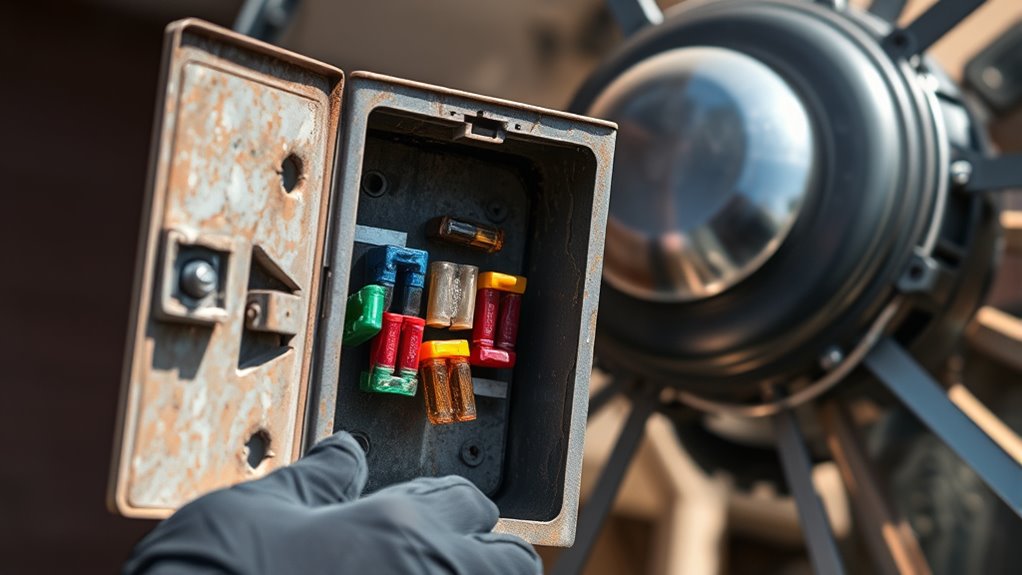

To check and replace the fuse in your outdoor fan, first turn off the power and unplug it for safety. Locate the fuse compartment, usually near the motor or control panel, and carefully open it. Inspect the fuse for signs of damage like a broken filament or blackened glass. If needed, replace it with a fuse of the same rating, ensuring it fits firmly. Following these steps can keep your fan running smoothly—continue for detailed guidance.
Key Takeaways
- Turn off power and unplug the outdoor fan before inspecting or replacing the fuse.
- Locate the fuse compartment near the motor or control panel and open it carefully.
- Check the fuse for signs of damage, such as a broken filament or blackened glass, and replace if faulty.
- Ensure the new fuse matches the original fuse’s amperage and voltage ratings before installation.
- After replacing, restore power and test the fan; replace the fuse again if it blows immediately.
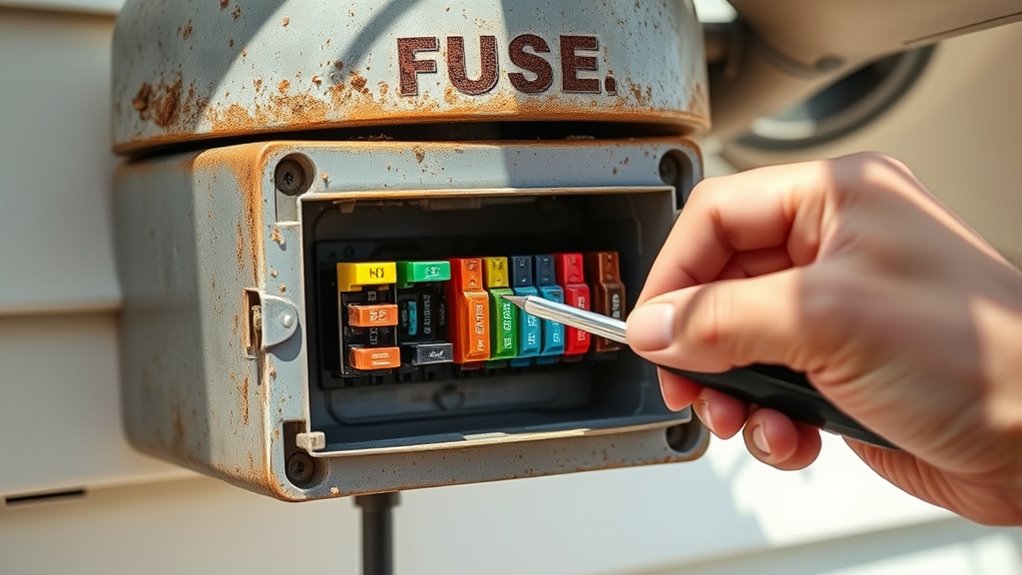
Outdoor fans rely on fuses to protect their electrical components from power surges and overloads. When a fuse blows, it interrupts the electrical flow, preventing damage to the motor or wiring. Before you start checking or replacing the fuse, it’s vital to prioritize safety precautions. Turn off the power supply completely and unplug the fan from the outlet to avoid any risk of electric shock. Wear insulated gloves if possible, and use tools with insulated handles. Avoid working on the fan if you’re unsure of any step or if the wiring appears damaged — safety should always come first.
Understanding the different fuse types is essential for proper replacement. Fuses come in various forms, such as glass tube fuses, ceramic fuses, or blade fuses. Some outdoor fans use a standard glass cartridge fuse, which is easy to identify and replace, while others might employ more specialized types. Check the fan’s manual or the fuse holder for specifications, including the fuse’s amperage rating. Using the wrong fuse type or an incorrect amperage can lead to ineffective protection or even pose a fire hazard. Always match the fuse’s amperage and voltage ratings exactly to the original to guarantee safety and proper functioning.
Different fuse types require matching amperage and voltage ratings for safe outdoor fan operation.
Once you’ve confirmed the safety precautions and identified the correct fuse type, you can begin the inspection process. First, locate the fuse compartment—usually found near the motor or control panel. Carefully open the fuse cover, taking care not to force anything and risk damage. Examine the fuse for signs of a blown condition, such as a broken filament or a blackened or cloudy appearance inside the glass. If the fuse looks intact but you suspect it’s faulty, it’s best to replace it rather than try to repair it.
Additionally, understanding the importance of attention during this process can prevent overlooked issues and ensure the fan operates correctly after repair. When installing a new fuse, ensure it fits snugly in the fuse holder. Push it in firmly, but don’t force it if it doesn’t slide in easily. Double-check the fuse ratings before closing the compartment. After replacing the fuse, restore the power and turn on the fan to see if it operates normally. If the fuse blows again immediately, it indicates an underlying electrical issue that needs further diagnosis. Remember, if you’re uncomfortable with any part of this process, it’s wise to consult a professional. Handling electrical components with care and precision will keep your outdoor fan functioning safely and efficiently for years to come.
Frequently Asked Questions
How Often Should I Check Outdoor Fan Fuses?
You should check your outdoor fan fuses periodically, especially if you notice it isn’t working properly. Fuse lifespan varies depending on usage and environmental conditions, so inspecting them every few months is wise. Regular checks help prevent damage caused by environmental impact like moisture or dirt. By staying proactive, you guarantee your fan operates efficiently and avoid costly repairs, keeping your outdoor space comfortable and safe.
Can I Replace a Fuse With a Different Amperage?
While it might seem okay to use a different fuse, you shouldn’t do it because fuse ratings are designed for specific amperage compatibility. Using a fuse with a higher amperage rating can be dangerous, risking motor damage or fire. Always match the fuse’s amperage to the original specifications to guarantee safe operation. Ignoring proper fuse ratings compromises safety and can cause costly damage to your outdoor fan.
Are Outdoor Fan Fuses Weather-Resistant?
Outdoor fan fuses typically aren’t weather-resistant on their own. You need a fuse with a weatherproof design to withstand outdoor elements like rain and humidity. This guarantees fuse durability and prevents corrosion or damage. If your outdoor fan is exposed to the weather, look for fuses specifically rated for outdoor use. Regular fuses without weatherproof features may fail quickly, so choose the right fuse to keep your fan running smoothly.
What Safety Precautions Should I Take When Handling Fuses?
When handling fuses during electrical troubleshooting, you should always prioritize safety. Wear personal protective equipment like insulated gloves and safety goggles to prevent shocks or injuries. Before touching any fuse, turn off the power source to avoid electrical hazards. Use insulated tools for removal or replacement, and make sure your hands are dry. These precautions help protect you from potential shocks and ensure a safe, effective fuse handling process.
How Do I Identify the Correct Fuse Type for My Outdoor Fan?
Did you know that choosing the right fuse type can prevent 80% of electrical issues? To identify the correct fuse for your outdoor fan, first check its fuse material, often glass or ceramic. Also, examine the fuse holder type, whether it’s a cartridge or blade style. Match these details with your fan’s specifications, usually found on a label or in the manual, ensuring safe and proper replacement.
Conclusion
Now that you’ve checked and replaced the fuses, you know how to troubleshoot and restore your outdoor fan. You understand the importance of safety, the value of patience, and the need for regular maintenance. By staying vigilant, checking connections, and replacing fuses when necessary, you guarantee your fan runs smoothly. Keep these steps in mind—because safety matters, because care counts, and because a well-maintained fan keeps your outdoor space cool and comfortable.