TL;DR

Get garden gear delivered free with Prime
- Fast, free delivery on millions of items
- Prime Video, Amazon Music and more included
- Member-only deals all year
A Country Living report describes six birds people may spot in their yards during winter: goldfinches, cardinals, woodpeckers, nuthatches, sparrows and hawks. It recommends high-energy feeder foods, native plants and sheltered cover, and points readers to the Audubon Christmas Bird Count, held December 14 to January 5.
Country Living has published a winter bird guide describing six species or groups people may see around their homes—goldfinches, cardinals, woodpeckers, nuthatches, sparrows and hawks—and steps to make yards more supportive. The advice focuses on food and shelter, while the report also points readers to the Audubon Christmas Bird Count, a community science program held from December 14 to January 5.
The report says winter birds can be easier to notice once flowers and fall foliage are gone, though not every bird stays in the same place year-round. It describes American Goldfinches as changing from bright summer yellow to more subdued olive-brown plumage. Benjamin Haywood, the National Audubon Society’s director of community science, says winter feathers require less energy to maintain when food is scarce and temperatures drop.
Other birds have different clues for identification. Male cardinals are bright red and females are rosy brown, according to the report. Woodpeckers, including downy and pileated varieties, search for insects by drilling into wood. Nuthatches are small, short-tailed birds that can move headfirst down tree trunks. Sparrows are often brown or gray, and the report notes that house sparrows are widespread. Hawks—including red-tailed, sharp-shinned, rough-legged and Cooper’s hawks—may be seen circling overhead as well as, less often, closer to home.
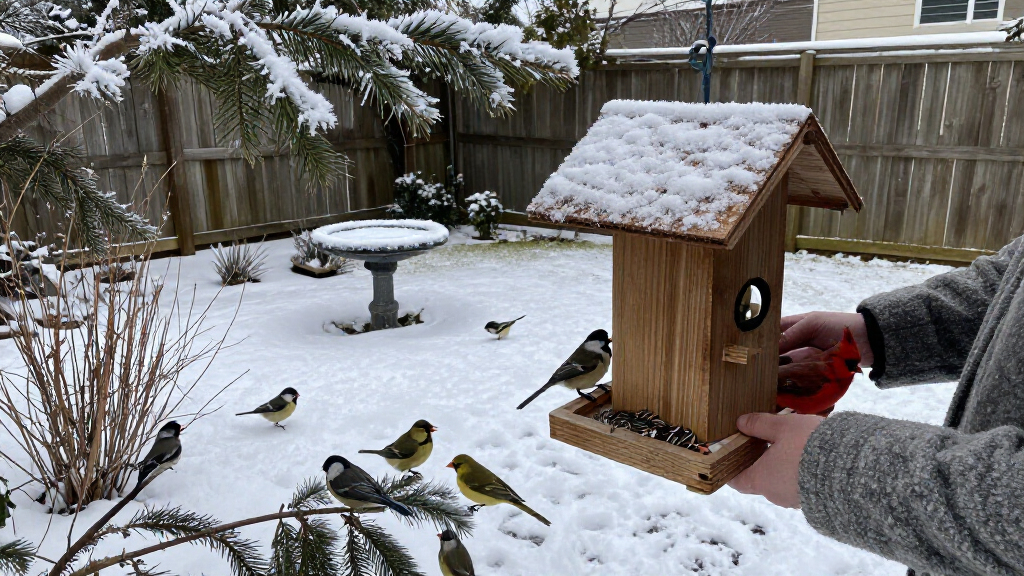
To support visiting birds, Haywood recommends keeping feeders stocked with high-energy foods such as suet, black oil sunflower seeds and nyjer, as described in these ways to feed garden birds safely. He also advises preserving or planting natural food sources, including berry-producing shrubs and seed-bearing plants. Brush piles and evergreen cover can provide shelter from wind and predators, as these backyard bird tips also explain.
Food and Shelter for Winter Birds
Winter conditions can limit both food and shelter, so yards may offer birds useful resources when natural supplies are harder to find. The report’s recommendations combine feeders with habitat: food alone is not the whole picture, and berry plants, seed-bearing vegetation, brush piles and evergreen cover can help create a more supportive space.
The advice also gives readers a way to connect backyard observations with broader conservation work. Taking part in the Christmas Bird Count lets people record birds alongside other volunteers. Haywood says the count’s long-running dataset has helped track population trends and inform conservation efforts. A yard sighting is not, on its own, evidence of a population change, but consistent counts can contribute observations to a larger record.
Products Worth Considering

Rachio 3 Smart Sprinkler Controller, 16 Zones

Husqvarna 130L Gas String Trimmer, 18-Inch

Greenworks 60V Cordless Leaf Blower with 2.5 Ah Battery and Charger
As an affiliate, we earn on qualifying purchases.
Recognizing Birds in Winter
Seasonal appearance can complicate identification. Haywood points to the American Goldfinch as a clear example: its bright yellow breeding-season look gives way to muted winter coloring. Cardinals change less dramatically, though Haywood says feather wear and lighting can affect how they appear over the season.
The six entries in the report are practical examples, not a complete list of winter birds. Which sparrows or hawks appear depends in part on location, and the article names several hawk species that may be seen in winter. Readers should not assume every bird in the guide is present in every region or that an individual bird will remain in one yard throughout the season.
The Christmas Bird Count provides a separate way to observe birds beyond the home feeder. Haywood describes it as an annual community science effort with more than 125 years of data. Participants can join a local count team, including beginners, during the stated December 14-to-January 5 period.
Local Sightings Vary by Region
The report does not give regional sighting data, population estimates or a forecast for how many birds will visit particular yards. It also does not identify which sparrow or hawk species a reader is most likely to encounter in a specific location. The presence of birds can vary with geography and local conditions, so the six examples should not be treated as a guarantee of sightings.
The source offers general habitat and feeding suggestions rather than measured results showing how much any single change increases bird visits or survival. Haywood’s statements about plumage, shelter and the value of bird-count data are attributed guidance; the report does not provide new research findings or quantify the effects of its recommendations.
Join the Seasonal Bird Count
Readers who want to contribute observations can look for a local Audubon Christmas Bird Count team during the program’s December 14 to January 5 window. Haywood says people with different levels of birding experience can participate and learn from other members of a team.
For backyard habitat, the report recommends maintaining suitable feeders and considering native, berry-producing or seed-bearing plants, along with brush piles and evergreen cover. It gives no schedule for future updates or additional reporting; the next stated opportunity is participation in the annual count.
Key Questions
Which six birds does the report highlight?
It highlights American Goldfinches, cardinals, woodpeckers, nuthatches, sparrows and hawks. The report names several kinds of woodpeckers and hawks, and notes that the sparrows people see depend on where they live.
What foods does the report recommend for feeders?
Benjamin Haywood recommends suet, black oil sunflower seeds and nyjer as high-energy options. The report also suggests supporting natural food sources such as berry-producing shrubs and seed-bearing plants.
How can a yard provide shelter for winter birds?
The report points to brush piles and evergreen cover as protection from wind and predators. These habitat features complement food provided through feeders or plants.
When does the Audubon Christmas Bird Count take place?
The report gives the count period as December 14 to January 5. Haywood says participants can join a local team, including people who are new to birding.
Will all six kinds of birds appear in every backyard?
No. The report says the birds seen depend on factors including location, and it does not provide local predictions. Its list is a guide to possible winter visitors, not a guarantee of sightings.
Source: countryliving.com