
TL;DR
Gardening Know How recommends planting peonies, azaleas, wisteria and alliums in October, saying fall conditions can help plants establish roots before next summer. The supplied source material names four flowers, although its headline promises six; it does not identify the other two.
Gardening Know How recommends planting peonies, azaleas, wisteria and alliums in October, saying fall conditions can help them establish roots before their next flowering season. The supplied report’s headline promises six flowers, but the available text describes only four, leaving the other two unidentified.

Get garden gear delivered free with Prime
- Fast, free delivery on millions of items
- Prime Video, Amazon Music and more included
- Member-only deals all year
The article’s central argument is that fall planting gives suitable plants time to develop roots before producing flowers. It says warm, moist soil and shorter days can favor root growth, while spring and summer planting may require a plant to establish itself as it is also flowering. The report presents this as gardening guidance; it does not provide trial results or comparative measurements.
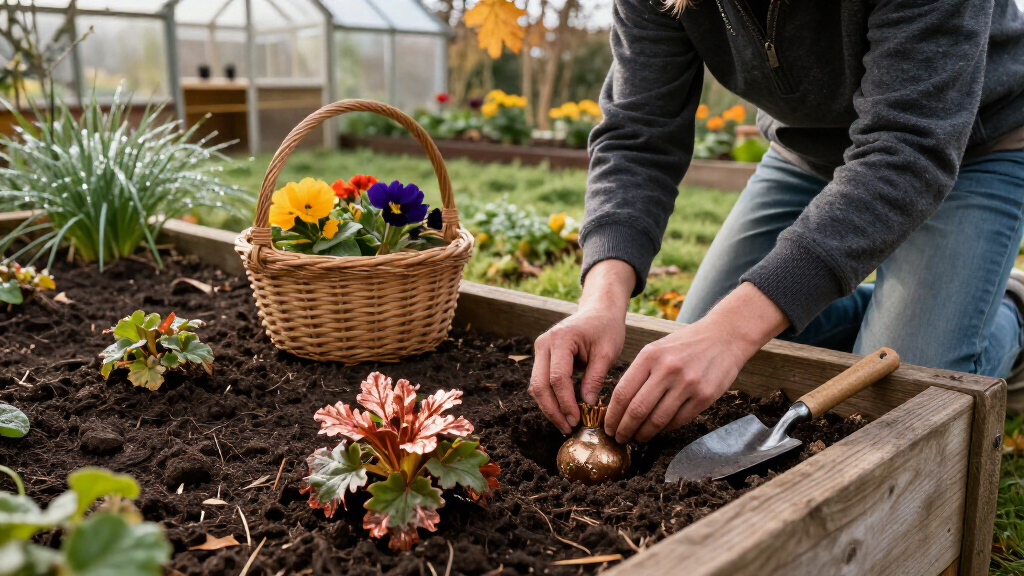
For peonies, the article identifies October as a time to plant bare roots. It advises placing them with their eyes, or buds, facing upward and no more than two inches below the soil surface, then watering them in. It says peonies are typically hardy in USDA zones 3–8 and can live for many years.
For azaleas, the report points to fall’s shorter days and more even moisture as conditions that may support root establishment. It recommends a two-inch mulch layer to moderate soil temperatures and limit winter freeze-thaw disturbance around the shrubs’ shallow roots. For wisteria, it says consistent moisture after planting can reduce transplant stress, while fall growth is directed toward roots. Alliums are presented as bulbs to plant in October, with varieties that flower at different points from May through summer.
Fall Planting Builds Roots
The practical value of the advice is its focus on establishment before flowering. A plant put in the ground while it is blooming may need to divide its resources between flowers and adapting to a new site, the article says. Allowing roots to develop ahead of the next growing season may help plants access water and nutrients and cope with summer heat.
The timing may also affect garden costs and workload. The report says bare-root peonies and some perennial plants can be cheaper in fall, and that cooler, moister conditions may mean less frequent watering than a spring or summer planting. Those are general claims in the article, not guarantees: local weather, soil, plant condition and care can change the outcome.
For readers planning a border or replacing plants, the list offers several kinds of planting material: a bare-root perennial, shrubs, a vine and bulbs. Their different forms and flowering schedules may help gardeners plan ahead, although the report does not give a complete six-flower list in the material provided.
Products Worth Considering

Orbit B-hyve XR 16-Zone Indoor/Outdoor Smart Sprinkler Controller

Greenworks 40V Brushless Cordless Chainsaw Kit, 16-Inch Bar, 4.0Ah Battery and Charger

Blackstone 1814 17-Inch Portable Propane Gas Griddle
As an affiliate, we earn on qualifying purchases.
Why October Can Suit Planting
The article contrasts fall planting with the spring and summer retail season, when garden centers often sell plants in bloom or close to it. Its explanation is that newly planted specimens may face the competing demands of flowering and root establishment, followed by summer heat. It says warm soil and more reliable moisture in fall can give roots time to spread before winter and the next spring’s growth.
The advice is plant-specific rather than universal. The article explicitly cautions that not every plant suits fall planting. It gives some hardiness-zone ranges for the named plants, but those ranges do not account for every local condition. The source also gives no publication date, named expert interview or independent study to assess the advice against.
The supplied text ends during its allium section. It names peonies, azaleas, wisteria and alliums, but does not include descriptions for the final two flowers implied by the headline. That gap means readers cannot use the supplied material as a complete six-item list.
Two Flowers Remain Unnamed
The main gap is the difference between the headline’s six-flower promise and the four entries in the supplied report text. It is unclear whether two sections were omitted from the source excerpt or whether the headline and article differ. The missing flowers should not be inferred from the four available entries.
The report also does not quantify how much fall planting improves survival or flowering compared with spring planting. It offers no location-specific planting calendar, forecast, soil test or controlled comparison. Its advice should be read as general guidance, with planting success dependent on local climate and care.
Check Local Planting Conditions
Gardeners considering these plants can check their local first-frost timing, soil drainage and the hardiness range for the variety they plan to buy. For azaleas, the source recommends mulch after planting; for newly planted wisteria, it emphasizes steady moisture. The article’s peony instructions specify the placement of the bare-root buds and watering after planting.
A complete version of the six-item list would be needed to identify the remaining recommendations. Until that information is available, the four named plants are the only choices supported by the supplied report. The article gives no later update or follow-up date.
Key Questions
Which flowers does the supplied article recommend planting in October?
It describes peonies, azaleas, wisteria and alliums. Although its headline promises six, the supplied text does not identify two additional plants.
How deep does the article say to plant peony bare roots?
It says to plant them with the eyes, or buds, facing upward, no more than two inches below the soil surface, then water them in.
Does the report prove fall planting produces more blooms?
No comparative study or measurements are included. The article argues that fall conditions can support root establishment before flowering, but outcomes depend on planting conditions and care.
Why does the headline mention six flowers?
The reason is not clear from the supplied material. It may be an incomplete excerpt, but the other two flowers are not named in the available text.
Source: rss