
TL;DR

Get garden gear delivered free with Prime
- Fast, free delivery on millions of items
- Prime Video, Amazon Music and more included
- Member-only deals all year
Homes and Gardens reports that outdoor drip irrigation systems should be shut off and drained before the first hard frost to reduce the risk of freeze damage. Its five recommended steps include draining the lines, removing the timer, protecting exposed valves and storing removable parts in a dry, frost-free place.
Outdoor drip irrigation systems should be shut off and drained before the first hard frost, according to a Homes and Gardens report that details five winterizing steps. The guidance matters because water left in tubing, fittings or backflow preventers can freeze and expand, potentially damaging the system and causing leaks.
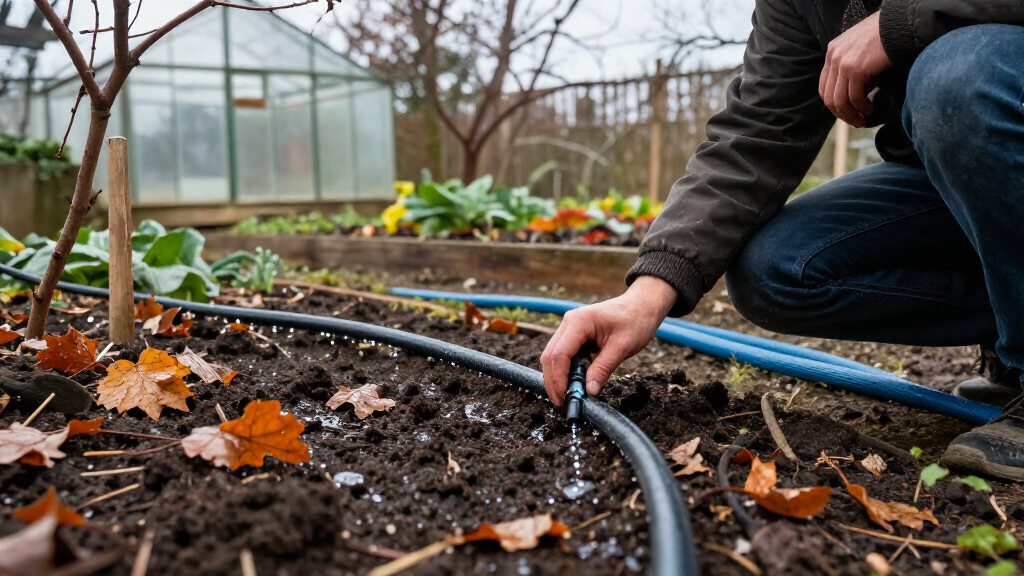
The report recommends starting by turning off the water supply at the tap, main source or system shut-off valve. Then open the line ends by removing caps or plugs and raise sections of tubing so gravity can help residual water drain. Allow time for the lines to empty rather than assuming that shutting off the water is enough.
Homeowners with a system timer should disconnect and remove it, take out its batteries and keep it in a dry, protected place. The report also advises draining and insulating exposed backflow preventers and valves. Foam pipe insulation or insulating tape can cover vulnerable above-ground parts; where the setup allows, a backflow preventer may be removed and stored somewhere warm.
The final step is to inspect removable parts—including tubing, drippers, fittings and control valves—for damage and store them in a dry, frost-free location. Some non-electrical components can remain outdoors, the report says, but they may still be damaged over winter. Labeling storage boxes can make it easier to find parts when the system is needed again.
Preventing Freeze Damage and Leaks
Water expands as it freezes, and irrigation components can crack or fail if water remains trapped inside them. Heather Todd, brand president of Conserva Irrigation, told Homes and Gardens that frozen water in lines or backflow preventers can damage pipes, valves and backflow assemblies.
Damage may extend beyond the irrigation equipment. Justin Wilson, owner of American Irrigation Repair, told the publication that a burst pipe or backflow preventer could force a homeowner to shut off water to the entire home to stop a leak. Draining and protecting the system is a preventive measure; the report does not quantify how often freeze damage occurs or the repair costs homeowners can expect.
Products Worth Considering

Greenworks 48V Cordless Lawn Care Combo Kit with 20-Inch Mower, Trimmer, Blower, Batteries, and Charger

Orbit B-hyve XD 4-Port Smart Hose Watering Timer with Wi-Fi Hub

EGO Power+ SNT2420 24-Inch Two-Stage Self-Propelled Snow Blower (Battery and Charger Not Included)
As an affiliate, we earn on qualifying purchases.
Frost Timing Depends on Location
The report says the right time to winterize varies by region: first frosts can arrive from early October through December, depending on location and U.S. hardiness zone. Its advice is to complete the shutdown before the first freeze that could damage the system, rather than waiting until cold weather is already underway.
Wilson, who works on irrigation systems in Central Texas, told Homes and Gardens that the area’s hardest freezes typically arrive in January and February, though some years bring none. He said he watches the forecast and prepares ahead of hard freezes. That example is specific to his region; homeowners should use local weather information rather than assume the same schedule applies everywhere.
“Water left in irrigation lines or backflow preventers can freeze and expand, potentially cracking pipes, damaging valves, or causing backflow assembly failures.”
— Heather Todd, brand president of Conserva Irrigation, quoted by Homes and Gardens
System Design and Local Conditions
The report does not give one temperature threshold or calendar date for every system; freeze risk varies by location and forecast. Nor does it establish whether every homeowner can safely drain each type of irrigation setup using the same method. Some systems may have components or instructions that call for specific handling.
Pressurized-air blowouts can remove water from lines, but Todd’s advice is to use a professional winterization service. The report warns that compressed air can damage pipes if used improperly. It does not specify pressure settings or provide instructions for performing a blowout independently.
Check Forecasts and Prepare Early
Homeowners should check local short- and long-range forecasts and complete the shutdown before a damaging hard freeze. Those who are unsure how to drain or protect a backflow preventer can contact an irrigation professional, particularly before using compressed air.
After winter, inspect stored and exposed components for cracks or other damage before reconnecting the system. The report does not give a specific spring restart date or a universal inspection procedure; timing will depend on local weather and the equipment.
Key Questions
When should I winterize my drip irrigation system?
Do it before the first hard freeze that could damage the system. Frost timing differs by region, so check local forecasts rather than relying on one national date.
What are the main steps?
Turn off the water, open and drain the lines, remove and store the timer, drain and protect exposed valves and backflow equipment, and inspect and store removable parts in a dry, frost-free place.
Can I use compressed air to clear the lines?
The report says a professional can use pressurized air to evacuate water, but warns that compressed air can damage pipes if used improperly. It recommends professional service rather than providing do-it-yourself pressure instructions.
Do all parts need to be brought indoors?
The report recommends storing removable parts such as tubing, drippers, fittings and controllers in a dry, frost-free place. Some non-electrical components may remain outdoors, but the report cautions that they may still be damaged over winter.
Source: homesandgardens.com