
To reuse gray water for your misting fan system, start by filtering it through mesh screens, sand, and charcoal to remove dirt and soap residues, ensuring it’s safe for spraying. Store it in a covered tank to prevent mosquito breeding. Connect the filtered water securely to your misting system and regularly clean or replace the filters. Keep in mind, safety and local regulations are essential—stick around for more details on setting up your eco-friendly system effectively.
Key Takeaways
- Research local regulations to ensure gray water reuse for misting systems is permitted and compliant.
- Install eco-friendly filters, such as mesh screens, sand, and charcoal, to remove contaminants from gray water.
- Store filtered gray water in a covered, dedicated tank to prevent mosquito breeding and contamination.
- Connect the filtered water securely to the misting system, and perform regular maintenance and filter cleaning.
- Avoid spraying on edible plants or areas with children unless the gray water is properly treated and sanitized.
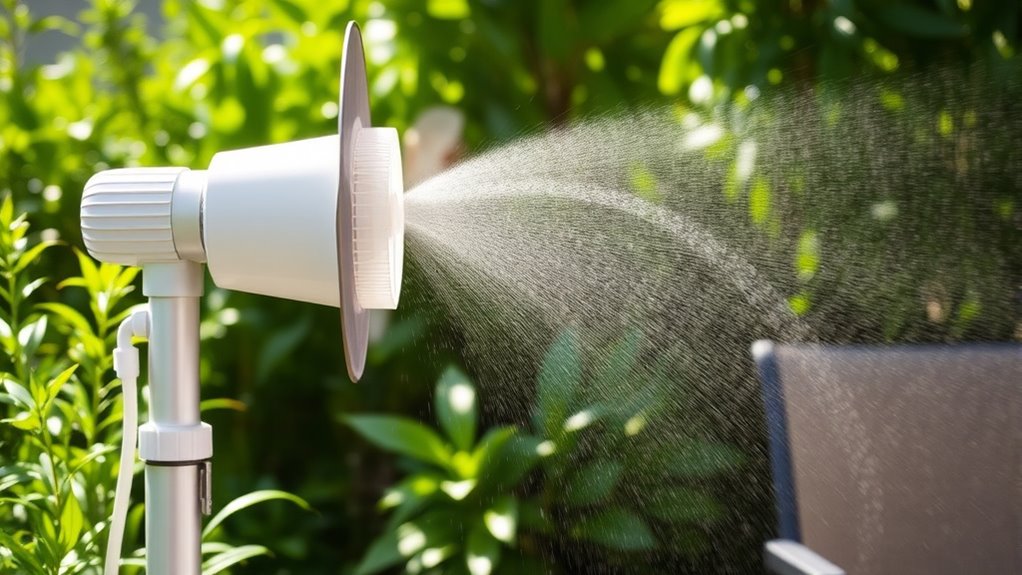
Reusing gray water offers a practical way to conserve fresh water and reduce your environmental impact. If you’re considering using gray water for your misting fan system, it’s imperative to understand local gray water regulations. These rules vary depending on where you live, and they typically specify how gray water can be collected, stored, and used safely. Ignoring these regulations can lead to health hazards or legal issues, so it’s imperative to research and comply with your area’s requirements before setting up your system. Once you’re clear on the regulations, you can focus on creating an eco-friendly filtration process to guarantee the gray water is safe for misting. Eco friendly filtration involves using natural or sustainable materials to remove contaminants, odors, and bacteria from the gray water. This step is essential because gray water can contain substances like soap residues, dirt, and organic matter that could clog your misting system or pose health risks if sprayed on plants or people. A simple eco friendly filtration setup might include a combination of a mesh screen to catch large debris, followed by layers of sand and charcoal to filter out smaller particles and impurities. These materials are affordable, widely available, and environmentally safe. Using eco friendly filtration not only helps keep your misting system clean but also minimizes your ecological footprint. Additionally, implementing space-saving filtration methods can optimize your setup in limited outdoor areas. After filtering, you’ll want to store the gray water in a dedicated tank or container designed to prevent stagnation and bacterial growth. Make sure the storage is covered to avoid mosquito breeding and contamination. When it’s time to operate the misting fan system, connect your filtered gray water supply to the system’s inlet, ensuring all connections are secure and leak-free. Regular maintenance of your filtration system is necessary to keep the water quality high; replace or clean your filters periodically based on how much gray water you process. This ongoing care guarantees your misting system functions efficiently and safely. When using gray water for misting, always observe safety precautions—avoid spraying on edible plants or areas where children play unless you’re certain the water has been properly treated. Properly managed gray water reuse can markedly reduce water bills and promote sustainable practices. By adhering to local gray water regulations and employing eco friendly filtration methods, you turn what would be waste into a valuable resource, making your outdoor space more sustainable and environmentally friendly. This approach allows you to enjoy the benefits of a cooling mist while actively contributing to water conservation efforts.
Frequently Asked Questions
Is Gray Water Safe for All Types of Plants?
Gray water’s plant compatibility varies, so you should consider water treatment before reuse. Some plants tolerate gray water well, while others may be harmed by contaminants or salts. Always test your gray water for proper pH and pollutants, and avoid using it on edible plants or those sensitive to chemicals. Proper water treatment guarantees safe reuse, helping your plants thrive without risking damage or soil buildup.
How Often Should Gray Water Be Filtered Before Reuse?
Imagine gray water as a river flowing through a lush garden—without regular care, debris can clog its path. You should filter gray water frequently, ideally every 24 to 48 hours, to keep it clear. Regular filtration guarantees water quality remains high, preventing buildup of contaminants. Don’t forget water quality testing; it’s your safeguard to ensure the gray water stays safe for reuse and your plants thrive.
Can Gray Water Cause Mineral Buildup in Misting Systems?
Gray water can cause mineral buildup in your misting system over time. These mineral deposits may clog nozzles and reduce efficiency. To prevent this, you should regularly perform system maintenance, including filtering the water and flushing out mineral deposits. Using a water softener or treatment can also help minimize mineral buildup, ensuring your misting system runs smoothly and lasts longer without costly repairs.
What Are the Legal Regulations for Gray Water Reuse?
When it comes to gray water reuse, you’re walking a tightrope, so understanding legal regulations is vital. You need to guarantee legal compliance by checking local laws on water rights and gray water use. Regulations vary widely, and ignoring them can lead to hefty fines. Always consult your local water authority to make sure your reuse practices align with legal standards, keeping your system safe and lawful.
How Do I Prevent Bacterial Growth in Gray Water Systems?
To prevent bacterial proliferation in your gray water system, you should focus on water sterilization methods like chlorination or UV treatment. Regularly clean and inspect your system to remove debris and biofilms that promote bacteria growth. Keep water moving to avoid stagnation, and consider adding natural disinfectants like hydrogen peroxide. These steps help maintain safe, bacteria-free gray water, ensuring your misting fans operate efficiently and safely.
Conclusion
By reusing gray water for your misting fan system, you’re fundamentally turning your backyard into a lush, oasis of paradise—imagine a rainforest right outside your door! Not only are you saving gallons of fresh water, but you’re also transforming your space into a mini Eden, where your plants thrive and your comfort skyrockets. So go ahead, embrace this eco-friendly hack and watch your outdoor paradise grow more vibrant and invigorating than you ever thought possible!