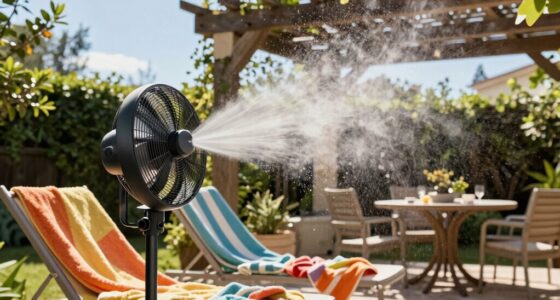
Misting fans can add some humidity indoors, but they aren’t designed for precise control like dedicated humidifiers. When you use them inside, they spray a fine mist that can raise moisture levels temporarily, but if not managed carefully, it could lead to excess humidity or dampness. They work best in well-ventilated spaces and with moderate use. To learn more about how you can safely use misting fans indoors, keep exploring the details below.

Get garden gear delivered free with Prime
- Fast, free delivery on millions of items
- Prime Video, Amazon Music and more included
- Member-only deals all year
Key Takeaways
- Misting fans can add humidity indoors but lack precise control, risking over-humidification.
- Proper placement and mist adjustment are essential to prevent excess moisture indoors.
- They are more suitable for temporary or supplemental humidification rather than continuous use.
- Regular monitoring of indoor humidity levels is recommended when using misting fans indoors.
- Designed mainly for outdoor use, misting fans are less effective and less controlled compared to dedicated humidifiers indoors.
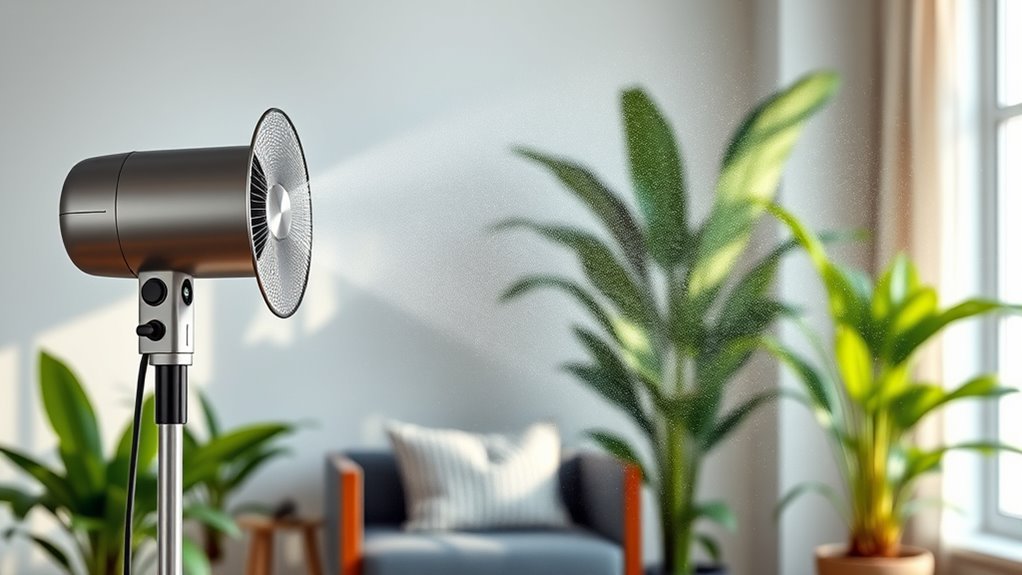
If you’re looking for an effective way to add moisture to dry indoor air, misting fans can serve as practical humidifiers. These devices work by spraying a fine mist of water into the air, which then evaporates and increases humidity levels. While designed primarily for outdoor applications, misting fans are versatile enough to be used indoors, provided you understand their capabilities and limitations. They harness the principle of evaporative cooling, which is how they lower temperatures and add moisture simultaneously. This process is particularly effective in dry environments where humidity levels are low, making misting fans a convenient option for boosting indoor comfort.
Misting fans add moisture indoors by evaporative cooling, boosting comfort in dry environments.
In outdoor settings, misting fans are popular for their evaporative cooling benefits. They’re used in patios, outdoor restaurants, and event spaces to keep people comfortable during hot days. Here, the outdoor environment allows the mist to evaporate quickly, providing a revitalizing breeze while maintaining low humidity levels outside. When you consider using a misting fan indoors, it’s essential to recognize that the same principle applies, but with different considerations. Since indoor spaces are usually more enclosed, the moisture added by the mist might linger longer, raising humidity levels more than intended if not managed properly. This can lead to issues like mold growth or excess dampness if the space isn’t well-ventilated.
Using misting fans indoors requires some planning. You want to ensure they’re placed in areas where the humidity isn’t already high and where excess moisture won’t cause damage to walls, furniture, or electronics. Adjusting the mist output can help control the level of humidity added, making these fans an adjustable humidification tool. Keep in mind that misting fans aren’t true humidifiers with precise controls; instead, they provide a more natural method of humidification that works best in controlled environments. Regular monitoring of indoor humidity levels will help you avoid over-humidifying your space. Additionally, understanding the 16PF traits can help identify personal sensitivities to moisture and humidity changes, ensuring a comfortable environment.
While misting fans excel at outdoor applications, they can be a practical, temporary humidification method indoors if used carefully. They’re especially helpful in dry seasons or climates where indoor air becomes uncomfortably arid. However, it’s also good to be aware that humidity control devices offer more precise regulation for large or sensitive spaces. Still, they do offer a cost-effective, easy-to-use solution for adding moisture when needed. Understanding how they leverage evaporative cooling and their outdoor origins can help you adapt their use indoors, ensuring you enjoy a more comfortable, humidified environment without unintended side effects.
Frequently Asked Questions
Do Misting Fans Add Sufficient Humidity for Indoor Plants?
Misting fans can boost humidity levels, but their misting efficiency varies and may not provide enough moisture for your indoor plants. If your plants need consistent hydration, relying solely on misting fans might fall short. You’ll need to monitor the humidity and supplement with regular watering or a dedicated humidifier for ideal plant hydration. Use misting fans as a supplementary tool rather than the primary source of humidity to keep your plants healthy.
Are Misting Fans Safe to Use Around Children and Pets?
You’re wondering if misting fans are safe around children and pets. The truth is, with proper use and supervision, they can be safe, but caution is essential. Keep the misting fan out of reach, guarantee it doesn’t spray directly into faces, and monitor children and pets closely. Prioritize child safety and pet safety by following manufacturer instructions and avoiding excessive moisture, preventing slips, or accidental injuries.
How Do Misting Fans Compare to Traditional Humidifiers?
Misting fans and traditional humidifiers serve different purposes. Misting fans use evaporative cooling and air circulation to lower temperatures by releasing fine mist, which can add some humidity but isn’t as consistent or controlled as a humidifier. Traditional humidifiers are designed specifically to increase and maintain humidity levels indoors, making them more effective for creating a comfortable environment, especially in dry conditions.
Can Misting Fans Help Improve Indoor Air Quality?
While misting fans gently promote air circulation, they don’t substantially contribute to air purification or improve indoor air quality. You might find that their mist can help keep the air feeling fresher, but they aren’t designed to filter or remove airborne pollutants. To truly enhance air quality, consider combining misting fans with air purifiers. This way, you support both better air circulation and cleaner, healthier indoor air.
What Maintenance Is Required for Misting Fans Used as Humidifiers?
You need to regularly maintain your misting fan used as a humidifier by cleaning filters to prevent buildup and guarantee ideal airflow. Check the nozzles frequently for clogs or mineral deposits, which can affect mist quality. Also, inspect the water reservoir and replace or clean it regularly to prevent mold and bacteria growth. Proper maintenance keeps your misting fan functioning efficiently and helps maintain healthy indoor humidity levels.
Conclusion
So, can misting fans double as humidifiers indoors? While they do add some moisture, they’re not the best substitute for dedicated humidifiers, especially in dry environments. Think of misting fans as a splash in the pond—refreshing but not enough to quench a desert’s thirst. If you’re aiming for consistent humidity, investing in a proper humidifier is your best bet. After all, why settle for a sprinkle when you can have a steady, gentle rain?
Fall yard work Picks
leaf blowers
As an affiliate, we earn on qualifying purchases.